New Free AI Coding Agent Goose Disrupts Claude’s $200 Subscription Model
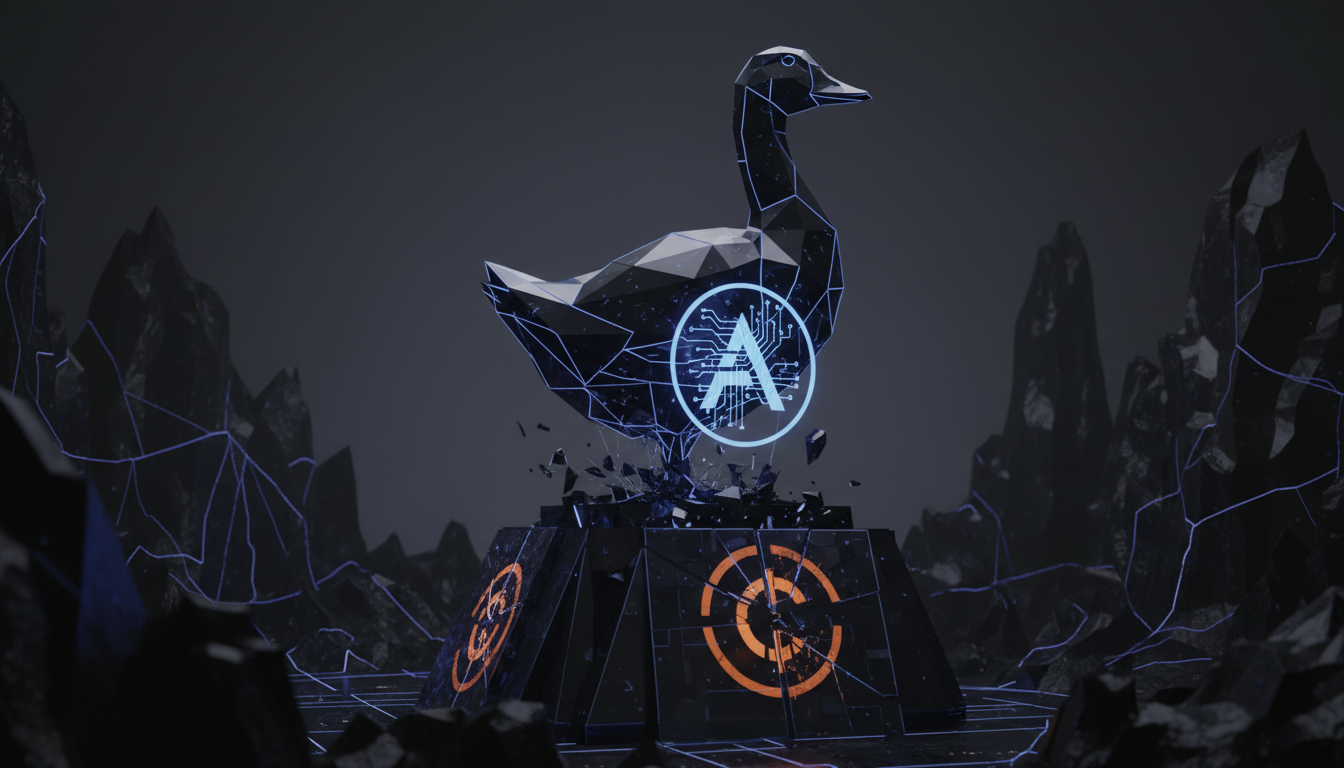
Executive Summary: The hegemony of proprietary, subscription-gated developer tools is facing its first major insurrection. With the release of Goose, an open-source AI coding agent developed by Block, the industry is witnessing a decoupling of the orchestration layer from the inference model. This architectural shift challenges the economic viability of Anthropic’s Claude Code, forcing a technical re-evaluation of local-first autonomy versus cloud-native convenience.
The Economic Schism in the AI Coding Agent Landscape
In the current trajectory of Generative AI development, the monetization strategy has largely relied on bundling the underlying Large Language Model (LLM) with the agentic framework—the software logic that allows the model to execute terminal commands, edit files, and run tests. Anthropic’s recent release of Claude Code exemplifies this vertical integration, positioning itself as a premium service where the utility is gated behind a consumption-based paywall that can escalate to $200 per month for heavy enterprise users.
However, the introduction of Goose introduces a disruptive variable: the commoditization of the agentic control plane. By releasing the orchestration logic as an open-source toolkit, Block has effectively removed the markup associated with “agent behavior.” An AI coding agent like Goose operates on a Bring Your Own Key (BYOK) architecture. This means the developer pays only for the raw inference tokens (via OpenAI, Anthropic, or local open-weights models like Llama 3 via Ollama) rather than paying a premium for the interface that manages those tokens.
From a systems architecture perspective, this mimics the evolution of web servers in the late 90s—moving from proprietary, black-box solutions to open standards (like Apache) where costs are strictly associated with hardware and bandwidth (in this case, inference compute).
Architectural Deconstruction: How Goose Orchestrates Intelligence
To understand why Goose poses a legitimate threat to established SaaS models, one must analyze its internal topology. Unlike a simple autocomplete copilot, Goose functions as a fully autonomous agent capable of “System 2” reasoning loops. It doesn’t just predict the next token; it formulates a plan, executes shell commands, parses the standard output (stdout), and iteratively corrects its own errors.
The Context Window Management Strategy
A critical bottleneck for any AI coding agent is the context window—the amount of code and history the model can “see” at once. Claude Code leverages Anthropic’s massive 200k+ token window natively, but this comes at high latency and cost. Goose addresses this through intelligent context pruning and RAG (Retrieval-Augmented Generation) optimization strategies local to the machine.
Goose interfaces directly with the developer’s file system, treating the IDE not as a text editor, but as a readable/writable database. When a user prompts Goose to “refactor the authentication module,” the agent:
- Crawls the directory tree to map dependencies.
- Reads relevant files into its active memory context.
- Proposes changes via patch files or direct writes.
- Verifies syntax by running the compiler or interpreter in the background.
This “read-eval-print loop” (REPL) structure allows Goose to persist intent across multiple turns of conversation, a feature previously reserved for high-tier subscriptions.
Extensibility via the Toolkit Protocol
Perhaps the most technically significant differentiator is Goose’s “toolkit” architecture. While Claude Code is a polished, closed ecosystem, Goose allows for modular extension. Developers can define custom tools—Python scripts or shell executables—that the agent can invoke.
For example, a DevOps engineer could write a custom tool allowing the AI coding agent to interact directly with a Kubernetes cluster or a proprietary CI/CD pipeline. Once registered, Goose understands the tool’s schema and can autonomously decide when to deploy a container or roll back a commit. This level of granular control is vital for enterprise environments where security policies prohibit opaque, cloud-hosted agents from touching production infrastructure.
The Latency and Security Implications of Local-First Agents
The debate between Claude Code and Goose is not merely financial; it is fundamentally about data sovereignty and inference latency. In a cloud-dependent model (Claude Code), every keystroke analysis and terminal command travels to Anthropic’s servers. While encryption in transit is standard, the intellectual property—the source code—must be processed remotely.
Zero-Trust Coding Environments
Goose enables a Zero-Trust architecture. By configuring the AI coding agent to utilize local models (such as Mistral Large or Llama 3 running on local NVIDIA hardware), an organization ensures that no code ever leaves the corporate intranet. For industries regulated by ITAR, HIPAA, or strict GDPR compliance, this air-gapped capability is not a luxury—it is a requirement.
Furthermore, even when using cloud APIs (like GPT-4o) via Goose, the developer retains control over exactly what telemetry is sent. There is no “black box” training loop where user code implicitly trains the next generation of the foundation model, a concern that persists with proprietary SaaS tools.
Comparative Analysis: Workflow Friction and Developer Experience
While Goose wins on cost and flexibility, Claude Code currently holds the advantage in “out-of-the-box” polish. Anthropic has fine-tuned their agent to handle ambiguity with superior grace, reducing the rate of hallucinations in complex refactors.
The Setup Barrier
Claude Code is designed for immediate gratification: authenticate and deploy. Goose, reflective of its open-source nature, requires a more hands-on configuration. Developers must manage their own API keys, configure environment variables, and potentially debug the agent’s installation. However, for the target demographic—senior engineers and architects—this friction is negligible compared to the long-term flexibility gained.
Integration with Modern IDEs
Both agents are racing to conquer the IDE (Integrated Development Environment). However, Goose’s open nature allows for community-driven plugins for VS Code, JetBrains, and Vim. This mirrors the trajectory of Linux vs. Windows; proprietary systems offer cohesion, but open systems offer ubiquity through community adaptation.
Future Projections: The Commoditization of ‘Agentic Glue’
The release of Goose signals a market correction. We are moving away from the era where the “wrapper” around an LLM commanded a high SaaS premium. The value is migrating down the stack to the model weights (the intelligence) and up the stack to the specific enterprise application (the outcome).
We anticipate a proliferation of forked versions of Goose, specialized for languages like Rust, Go, or legacy COBOL. The AI coding agent of 2025 will likely be a highly personalized, local-first orchestrator that swaps out backend models dynamically—using a cheap model for syntax checking and an expensive, high-parameter model for architectural design—optimizing cost and performance in real-time.
Technical Deep Dive FAQ
Can Goose truly replicate the performance of Claude Code without the subscription?
Technically, yes, but with caveats. Goose is the orchestration layer. If you connect Goose to the same underlying model (Claude 3.5 Sonnet) via API, the reasoning capabilities are identical. The difference lies in the proprietary system prompts and “tool use” fine-tuning that Anthropic applies to Claude Code. However, Goose’s extensibility allows developers to prompt-engineer their own optimizations to close this gap.
How does Goose handle large repositories compared to SaaS agents?
SaaS agents often use proprietary vector databases to index code. Goose relies on local indexing and the developer’s file system. While potentially slower on initial indexing for massive monorepos, Goose offers more transparency. Developers can explicitly direct the AI coding agent to focus on specific directories, reducing noise and token consumption.
Is it safe to give an AI agent write access to my CLI?
This is a critical security consideration. Goose operates with the permissions of the user running it. It is strongly recommended to run any AI coding agent within a sandboxed environment (like a Docker container or a dedicated development VM) to prevent accidental deletion of critical system files or unauthorized network requests.
Does Goose support local LLM inference?
Yes. Because Goose is model-agnostic, it can be configured to point to local endpoints (such as those provided by Ollama or LM Studio). This allows for a completely offline coding assistant, provided the local hardware has sufficient VRAM to run a model with decent reasoning capabilities (e.g., 7B parameters or higher).
This technical analysis was developed by our editorial intelligence unit, leveraging insights from the original briefing found at this primary resource.