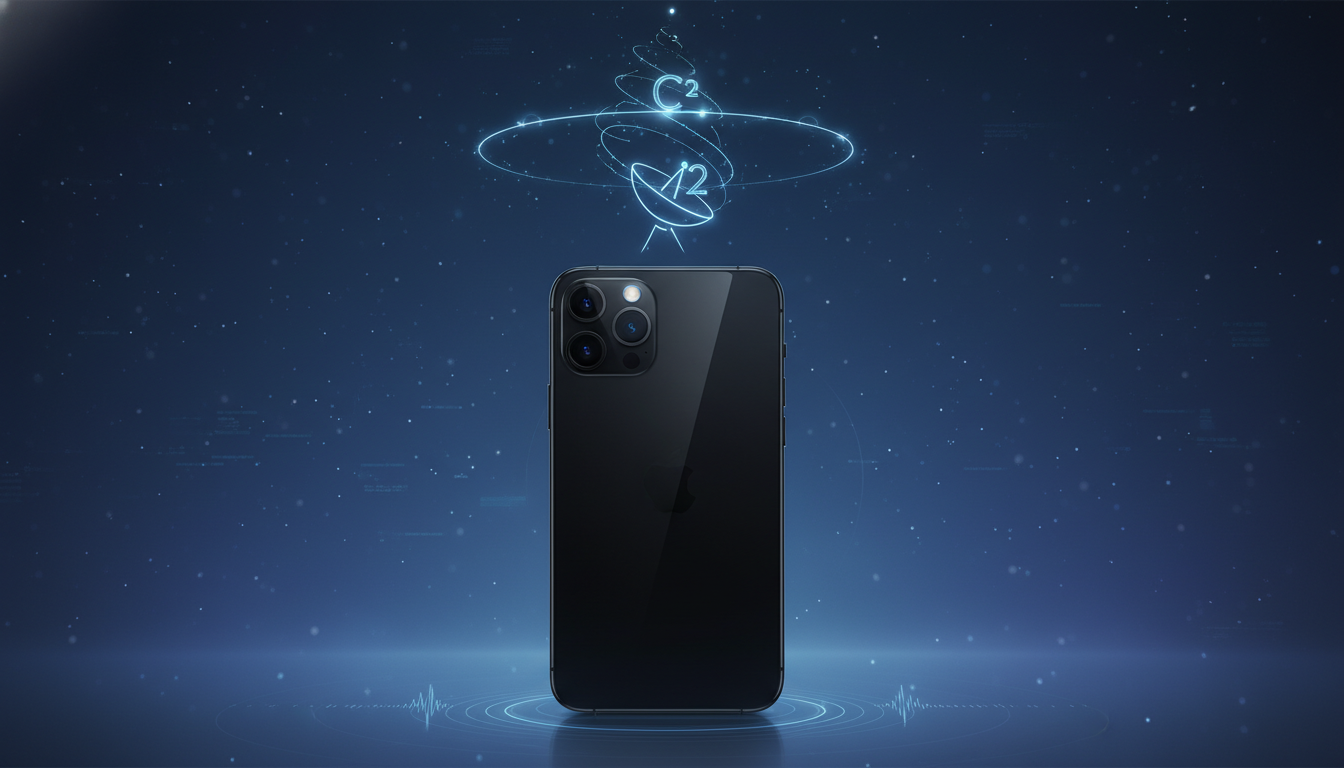
The Dawn of True Vertical Integration: iPhone 18 Pro and the Apple C2 Modem
In the relentless pursuit of technological sovereignty, Apple Inc. stands on the precipice of its most significant hardware evolution since the transition to Apple Silicon for the Mac. The upcoming iPhone 18 Pro, slated for release in the latter half of 2026, represents more than just a cyclical upgrade; it marks the culmination of a decade-long strategy to eliminate dependency on external suppliers for critical connectivity components. At the heart of this revolution is the Apple C2 Modem, a proprietary baseband processor designed to fundamentally reshape how mobile devices communicate with the world—and the space above it.
For years, the industry has watched the volatile relationship between Apple and Qualcomm, a partnership defined by legal battles and reluctant licensing agreements. With the iPhone 18 Pro, Apple is not merely cutting the cord; they are rewriting the standards of 5G connectivity. The integration of the C2 modem promises to deliver unprecedented power efficiency, tighter integration with the A-series application processor, and, most notably, next-generation 5G Satellite Connectivity. This article provides an exhaustive analysis of this technological paradigm shift, exploring the architecture of the C2 chip, the mechanics of Non-Terrestrial Networks (NTN), and the broader implications for the global smartphone market.
The Strategic Imperative: Why Apple Abandoned Qualcomm
To understand the significance of the C2 modem, one must analyze the historical context of Apple’s silicon ambitions. Control over the "whole widget"—hardware, software, and silicon—has been the ethos of Cupertino under Tim Cook’s leadership. While Apple mastered the Central Processing Unit (CPU) and Graphics Processing Unit (GPU) with its A-series and M-series chips, the cellular modem remained the final frontier of reliance on third-party intellectual property.
The journey began earnestly with the acquisition of Intel’s smartphone modem business in 2019, a billion-dollar investment that transferred over 2,000 engineers and 17,000 wireless technology patents to Apple. The goal was clear: replicate the success of the M1 chip in the realm of radio frequency (RF) connectivity. Reliance on Qualcomm Snapdragon modems, while performant, imposed constraints on motherboard design, battery optimization, and profit margins due to hefty licensing fees.
The Complexity of Baseband Engineering
Developing a modem is arguably more complex than designing a CPU. A processor must execute instructions correctly; a modem must communicate with hundreds of carriers globally, navigating a chaotic spectrum of legacy 3G, 4G LTE, sub-6GHz 5G, and mmWave frequencies. It must handle analog signal interference, handovers between cell towers moving at highway speeds, and varying regulatory standards across continents. The C2 modem represents the second iteration of Apple’s internal efforts, suggesting that a first-generation chip (likely tested in lower-volume devices like the iPhone SE) paved the way for this flagship deployment in the iPhone 18 Pro.
Deconstructing the Apple C2 Modem Architecture
The C2 is not simply a generic 5G modem; it is a bespoke component tailored specifically for the iPhone’s internal architecture. By moving development in-house, Apple achieves a level of synergy between the application processor (likely the A20 Pro) and the baseband processor that was previously impossible with off-the-shelf Qualcomm components.
Optimization and Thermal Management
One of the primary criticisms of early 5G adoption was the significant battery drain and thermal throttling associated with high-speed data transfer. Third-party modems are designed to be "one-size-fits-all," accommodating various Android architectures. In contrast, the C2 is inextricably linked to the iPhone’s power management integrated circuits (PMIC). This allows for dynamic power scaling, where the modem can aggressively sleep nanoseconds after a transmission is complete, potentially extending the iPhone 18 Pro’s battery life by 15-20% under 5G loads compared to its predecessors.
Advanced Lithography
Industry reports indicate that the C2 modem will likely utilize TSMC’s advanced process nodes, potentially 2nm or an enhanced 3nm fabrication process. This miniaturization reduces the physical footprint of the modem on the logic board, freeing up valuable internal volume. For the end-user, this reclaimed space could be utilized for larger battery capacities, improved Taptic Engines, or enhanced thermal cooling chambers essential for sustained performance.
The Game Changer: 5G via Satellite (NTN)
The headline feature of the C2 modem is its native support for advanced Non-Terrestrial Networks (NTN). While the iPhone 14 introduced "Emergency SOS via Satellite," that technology was limited to low-bandwidth text packets sent in dire situations. The C2 modem in the iPhone 18 Pro aims to democratize satellite connectivity, transforming it from a safety net into a daily utility.
Unlike the rudimentary connection of the past, the C2 is engineered to support 5G Satellite Connectivity. This evolution implies data throughput capabilities significantly higher than simple text messaging. We are looking at a future where the iPhone 18 Pro can facilitate voice calls, image transmission, and potentially low-bitrate data streaming in areas completely devoid of terrestrial cellular coverage.
Mechanics of Consumer Satellite 5G
This capability relies on the 3GPP Release 17 and Release 18 standards, which define how 5G New Radio (NR) can function over non-terrestrial links. The C2 modem must account for the extreme Doppler shifts caused by Low Earth Orbit (LEO) satellites moving at thousands of miles per hour. Furthermore, the modem must manage the high latency inherent in signal travel distances ranging from 500 to 1,200 kilometers.
- Signal Processing: The C2 utilizes advanced machine learning algorithms to predict satellite trajectories and optimize beamforming, ensuring a stable link without requiring bulky external antennas.
- Spectrum Agility: The modem is designed to switch seamlessly between terrestrial terrestrial bands (like n77 or mmWave) and satellite S-band or L-band frequencies seamlessly, offering a "connected everywhere" experience.
- Partner Ecosystem: This hardware advancement suggests an expansion of Apple’s partnership with satellite operators like Globalstar, or potentially new agreements to handle the increased bandwidth load required by 5G data services.
Economic and Industrial Implications
The introduction of the C2 modem in the iPhone 18 Pro sends shockwaves through the semiconductor market. For Qualcomm, the loss of Apple as a primary modem customer is a significant revenue hit, forcing the San Diego giant to diversify further into automotive and IoT sectors. For the consumer, this competition drives innovation. When Apple controls the silicon, they are no longer beholden to the roadmap of a supplier. If Apple wants to prioritize satellite features over mmWave peak speeds, or vice versa, they have the autonomy to do so.
The A20 and C2 Synergy
The integration goes beyond mere co-existence. By designing the C2 alongside the A20 Pro chip, Apple can implement unified memory architectures or shared cache systems for data packets. This reduces latency in high-demand applications like Augmented Reality (AR) via the Vision Pro ecosystem, where the iPhone often acts as a tethered data hub. The "handshake" between the modem and the main processor becomes instantaneous, reducing the overhead that typically causes lag in cloud-gaming or high-fidelity streaming scenarios.
Beyond the Horizon: The Road to 6G
The C2 modem is not just about the present; it is foundational infrastructure for the future. As the telecommunications industry begins to define the parameters of 6G (expected commercially around 2030), the integration of terrestrial and non-terrestrial networks is a core pillar. Apple’s aggressive push into satellite 5G with the iPhone 18 Pro positions them as a leader in this hybrid connectivity model. We are moving toward an era of "Ambient Connectivity," where the device is intelligently aware of its environment—switching between Wi-Fi 7, 5G towers, and LEO satellite constellations without the user ever noticing a drop in service.
Furthermore, the success of the C2 will likely lead to its deployment across the entire Apple ecosystem. We can anticipate variants of this modem appearing in future iPad Pros and perhaps even MacBook Pro models, finally bringing true, always-on cellular connectivity to the Mac lineup without the compromises of the past.
Frequently Asked Questions
1. How does the C2 modem differ from the Qualcomm modems used in previous iPhones?
The C2 modem is designed in-house by Apple specifically for the iPhone’s architecture, whereas Qualcomm modems are general-purpose chips sold to many manufacturers. The C2 allows for deeper integration with the iPhone’s main processor and operating system, leading to superior power efficiency, better thermal management, and unique features like optimized 5G satellite connectivity that third-party chips may not prioritize.
2. Will the iPhone 18 Pro’s satellite connectivity allow for internet browsing?
While specific throughput speeds have not been confirmed, the transition to "5G Satellite Connectivity" via the C2 modem implies capabilities far beyond the text-only Emergency SOS. Users can expect the ability to send photos, voice messages, and potentially perform light web browsing or data syncing in remote locations, though high-bandwidth streaming (like 4K video) may still be limited by satellite capacity.
3. Does the C2 modem support mmWave 5G?
Yes, the Apple C2 modem is expected to support the full spectrum of 5G frequencies, including Sub-6GHz and the high-speed mmWave bands utilized in dense urban environments. Apple has invested heavily in RF front-end modules to ensure their proprietary silicon matches or exceeds the peak download speeds of competitors.
4. When will the iPhone 18 Pro with the C2 modem be released?
Based on current production cycles and supply chain leaks, the iPhone 18 Pro featuring the C2 modem is expected to launch in September 2026. This timeline aligns with Apple’s typical annual release schedule and the maturation of the 2nm manufacturing processes required for these advanced chips.
5. Will the C2 modem improve battery life on the iPhone 18 Pro?
Absolutely. One of the primary drivers for Apple creating its own modem is power efficiency. By tightly coupling the modem’s sleep/wake cycles with the iOS software and the A-series processor, the C2 prevents unnecessary power drain, offering significantly better battery performance during 5G data usage compared to off-the-shelf solutions.