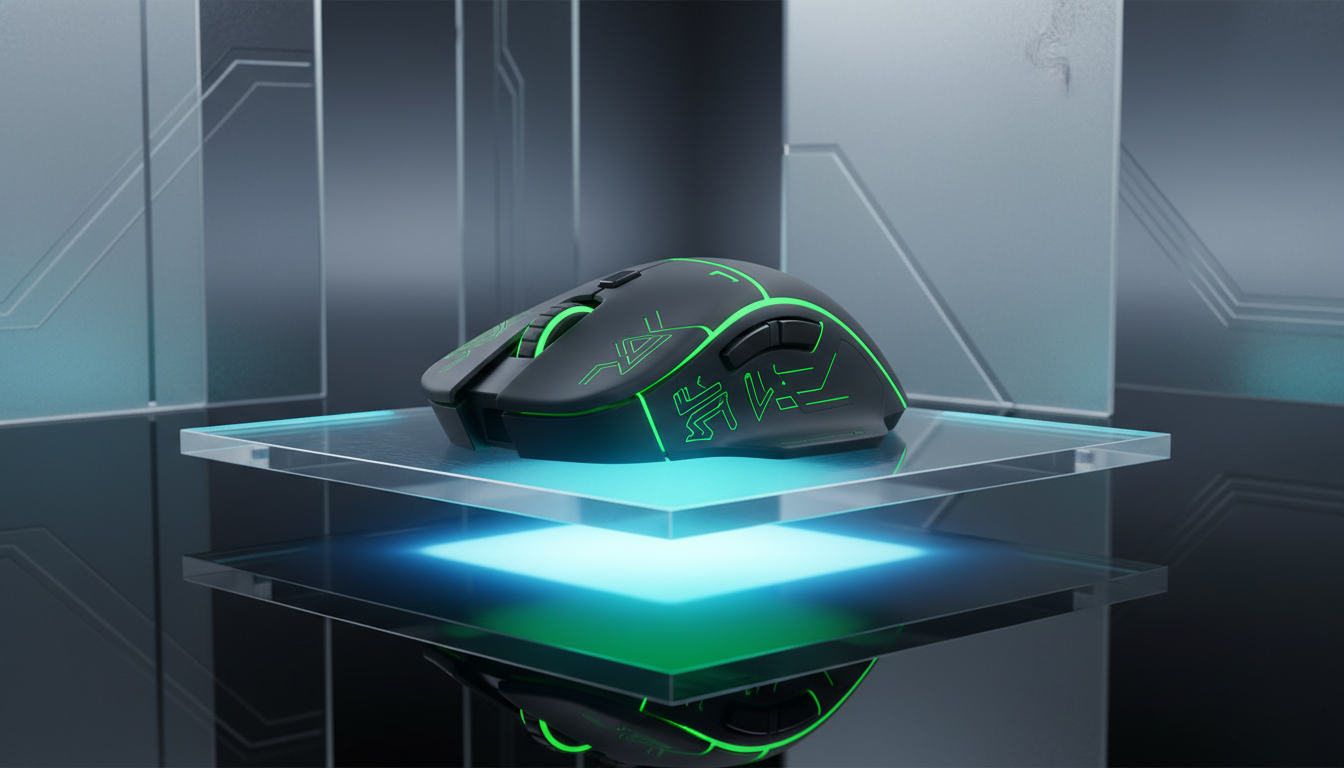
The Resurrection of a Legend: Decoding the $1,337 Razer Boomslang Limited Edition
In the pantheon of gaming peripherals, few devices command the reverence, nostalgia, and historical weight of the Razer Boomslang. Originally released in 1999, the Boomslang was not merely a peripheral; it was the genesis of the entire gaming mouse industry. It marked the moment when input devices transitioned from office utilities to precision instruments of digital warfare. Now, in a move that blends heritage with hyper-luxury, Razer has announced the 2026 Limited-Edition Boomslang. The price tag? A symbolic and staggering $1,337.
This is not a mass-market product. It is a statement piece, a collector’s artifact, and a demonstration of technical supremacy. By pricing the unit at $1,337—a nod to the “1337” (Elite) speak that dominated the early internet and gaming culture—Razer is signaling that this device is intended for the true connoisseurs of esports history. This pillar page dissects the technical specifications, the cultural impact, the materials engineering, and the semantic significance of this launch, establishing why the return of the Boomslang is a watershed moment for the peripheral industry.
The Genesis of Precision: Understanding the Boomslang Legacy
To understand the gravity of this 2026 release, one must first revisit the landscape of 1999. Before the Boomslang, computer mice were predominantly mechanical ball mice, prone to collecting dust and suffering from inconsistent tracking. Gamers relied on standard office equipment that was never designed for the twitch reflexes required by titles like Quake III Arena or Unreal Tournament.
The original Razer Boomslang shattered this paradigm. It introduced an unprecedented DPI (dots per inch) sensitivity of 1000 and later 2000, at a time when standard mice struggled to reach 400. It utilized opto-mechanical technology that bridged the gap between analog tracking and digital precision. The 2026 iteration is not just a reissue; it is a spiritual successor that seeks to capture that same leap in innovation, translated into the modern language of ultra-lightweight materials and wireless supremacy.
The Evolution of Form Factor
The Boomslang was famous—and infamous—for its unique ergonomic shape. It featured a wide, flat profile with large buttons that extended nearly halfway down the body. This “ambidextrous-adjacent” design forced a specific grip style that many professional gamers swore by. The new limited edition retains this iconic geometry but refines it using modern anthropometric data, ensuring that while the silhouette remains nostalgic, the comfort meets the rigorous standards of modern esports athletes.
Technical Anatomy: Inside the $1,337 Chassis
A price point of $1,337 demands more than just nostalgia; it requires material science and engineering that borders on the excessive. Razer has equipped the 2026 Boomslang with a suite of technologies that represent the absolute zenith of current peripheral capabilities.
1. The Magnesium and Glass Composite Shell
Unlike standard ABS plastic shells, the Limited-Edition Boomslang utilizes a proprietary magnesium alloy skeleton. This material choice provides distinct advantages:
- Structural Rigidity: Magnesium offers a strength-to-weight ratio superior to aluminum, ensuring zero flex during intense grip pressure.
- Thermal Conductivity: The metal remains cool to the touch, reducing palm perspiration during extended gaming sessions.
- Weight Reduction: The chassis achieves a sub-50g weight without the need for the “honeycomb” perforation aesthetic, maintaining a sleek, solid, and premium look.
2. The Focus Pro 35K Optical Sensor
At the heart of the device lies the latest iteration of Razer’s tracking technology. The Focus Pro 35K sensor represents the pinnacle of optical precision. It is capable of tracking on flawless glass surfaces—a critical feature for high-end setups—and boasts a resolution accuracy of 99.8%. This sensor technology ensures that the physical movement of the mouse is translated to pixel movement with 1:1 fidelity, eliminating jitter and smoothing algorithms that can interfere with muscle memory.
3. HyperPolling Wireless Technology
Latency is the enemy of performance. The 2026 Boomslang integrates native 8000Hz wireless polling. This means the device reports its position to the computer 8,000 times per second, reducing input delay to roughly 0.125 milliseconds. For the average user, this is imperceptible. For the target audience of this mouse—competitive enthusiasts and collectors—it is a non-negotiable specification that ensures the hardware is never the bottleneck.
The Economics of “1337”: Pricing as a Cultural Signal
The pricing strategy here is deeply rooted in internet subculture. “1337” (Leet) speak was the vernacular of the early hacking and gaming communities, where numbers replaced letters to form an exclusive dialect. By setting the price at $1,337, Razer is effectively “gatekeeping” the product, ensuring it lands in the hands of those who understand the reference and value the heritage.
This moves the Boomslang out of the category of “consumer electronics” and into the realm of “Veblen goods.” In economics, a Veblen good is a luxury item for which demand increases as the price increases, due to its exclusive nature and status appeal. Much like a limited-run mechanical keyboard or a luxury timepiece, the $1,337 Boomslang is an asset class. The secondary market for such peripherals often sees values double or triple, creating a micro-economy of peripheral trading.
Limited Edition Exclusivity: The Serial Number Protocol
Reports indicate that the production run is strictly capped. Each unit comes in a custom-machined aluminum flight case, accompanied by a certificate of authenticity signed by Razer CEO Min-Liang Tan. The units are individually serialized.
“We are not just selling a mouse; we are selling a piece of history. The 2026 Boomslang is a tribute to the gamers who were there at the beginning, the ones who remember ball mice and CRT monitors. It is a love letter to the roots of our industry.” — Industry Analyst on the Razer Launch.
This scarcity creates a “Fear of Missing Out” (FOMO) psychological trigger. For collectors who curate museums of gaming history, possessing a low-serial number Boomslang is equivalent to a sneakerhead acquiring a rare pair of Air Jordans. It validates their status within the community.
Comparative Analysis: Boomslang vs. Modern Flagships
To evaluate the true value proposition, we must compare the limited-edition Boomslang against current market leaders like the Razer Viper Mini Signature Edition or the Finalmouse Ultralight series.
| Feature | Razer Boomslang (2026 LE) | Standard Flagship (e.g., Viper V3) | Competitor Luxury (Finalmouse) |
|---|---|---|---|
| Chassis Material | Magnesium / Tempered Glass | High-Grade ABS Plastic | Magnesium Alloy |
| Polling Rate | 8000Hz (Native Wireless) | 4000Hz (Dongle Dependent) | 4000Hz – 8000Hz |
| Sensor DPI | 35,000 (Focus Pro Gen-5) | 30,000 (Focus Pro Gen-3) | 26,000+ |
| Switch Type | Optical Gen-4 (100M Clicks) | Optical Gen-3 (90M Clicks) | Mechanical / Optical Hybrid |
| Price | $1,337 | $150 – $280 | $190 – $300 (Retail) |
While the technical specs of the Boomslang are superior, the diminishing returns on performance do not solely justify a 500% price markup. The delta in value is derived entirely from the intangible assets: the brand equity, the limited availability, and the specific design language that pays homage to the 1999 original.
The Role of Sustainable Luxury in Gaming
An overlooked aspect of this launch is the packaging and sustainability angle. High-end luxury electronics are moving away from disposable packaging. The Boomslang’s presentation box is designed to be a permanent display case. This aligns with a broader trend in the “Right to Repair” and sustainability movements.
By using durable materials like magnesium and glass, Razer ensures the device has a longer lifespan than plastic alternatives, which degrade over time due to UV exposure and skin oils. The internal components, including the battery, are reportedly modular in this edition, allowing for replacement—a rarity in the ultra-lightweight mouse category where batteries are usually glued in to save weight.
Future Implications: The “Hyper-Premium” Peripheral Market
The success of the $1,337 Boomslang will likely validate a new market segment: Hyper-Premium Peripherals. We have seen this in the custom mechanical keyboard world, where boards like the TGR Jane or Keycult commissions sell for thousands. Razer is attempting to bring this tier of valuation to the mouse market.
If successful, we can expect other manufacturers to follow suit. We may see Logitech revive the original Wingman or Microsoft bring back the IntelliMouse Explorer 3.0 in titanium or carbon fiber. This shifts the industry focus from “race to the bottom” pricing wars to a “race to the top” prestige competition.
User Experience: Connectivity and Software Ecosystem
The Boomslang integrates seamlessly with Razer Synapse 5, the latest iteration of their control software. However, for this limited edition, the software experience is bespoke. Upon connecting the device, the UI shifts to a “Retro 1999” skin, complete with CRT scanline effects and the original green-on-black aesthetic.
This software layer allows for granular control over:
- Lift-Off Distance (LOD): Adjustable in 0.1mm increments.
- Motion Sync: Synchronizing sensor signals with USB polling intervals for smoother tracking.
- Battery Management: Optimization profiles for tournament play versus casual browsing.
This attention to software detail reinforces the premium nature of the product. It is not just hardware; it is a curated digital experience.
Frequently Asked Questions
1. Why is the new Razer Boomslang priced at ,337?
The ,337 price is a deliberate reference to “Leet” (1337) speak, a cultural nod to early internet gaming history. It also reflects the ultra-premium materials (magnesium alloy), limited production run, and collector’s nature of the device.
2. Is the 2026 Boomslang good for competitive gaming?
Absolutely. Despite being a collector’s item, it features top-tier specifications including the Focus Pro 35K Optical Sensor, 8000Hz wireless polling, and Gen-4 Optical Switches, making it one of the highest-performing mice on the market.
3. How does the shape compare to modern gaming mice?
The Boomslang retains its iconic wide, flat, and ambidextrous-adjacent shape from 1999. While distinct from modern ergonomic shapes like the DeathAdder, it has been refined for better weight balance and grip comfort suitable for modern grip styles (claw and fingertip).
4. Will this limited edition be restocked?
Given the “Limited Edition” branding and the specific serialization of the units, it is highly unlikely Razer will restock this specific model once sold out. This scarcity is a core component of its value proposition.
5. Does the mouse come with a warranty?
Yes, typically Razer provides a warranty for their premium products. However, due to the limited nature of the chassis, replacements might be handled differently, potentially involving repair services rather than full unit swaps to preserve the serial number.