Executive Summary: The era of the generic, monolithic Large Language Model (LLM) is rapidly dissolving. NVIDIA’s latest research initiative, PersonaPlex, represents a seismic shift in Human-Computer Interaction (HCI), moving beyond static prompt engineering into the realm of dynamic, multimodal identity architecture. This analysis dissects the underlying mechanisms of PersonaPlex, exploring how it achieves zero-shot role alignment and high-fidelity voice synthesis to create truly distinct AI agents.
The Architecture of Agentic Identity: Beyond System Prompts
For years, the industry standard for inducing “personality” in LLMs relied heavily on the prologue of the context window—the system prompt. While effective for basic tone adjustments, this method suffers from context drift and catastrophic forgetting as conversation depth increases. NVIDIA PersonaPlex redefines this by decoupling identity from the context window’s volatility, likely leveraging retrieval-augmented generation (RAG) pipelines specifically tuned for personality traits and bio-data, rather than just factual knowledge.
The core innovation here is not merely text generation; it is the semantic synchronization of role-play logic with acoustic fidelity. By treating “Persona” as a composite of distinct vector embeddings—one for semantic knowledge (the role) and one for acoustic prosody (the voice)—PersonaPlex achieves a level of immersion that static fine-tuning (SFT) cannot replicate without massive compute overhead.
Multimodal Inference: Converging Transformer Streams
At the heart of PersonaPlex lies the challenge of multimodal alignment. In traditional pipelines, Text-to-Speech (TTS) is a downstream process, completely blind to the intent of the text generation model. PersonaPlex appears to bridge this gap, creating a feedback loop where the emotional cadence of the voice informs the lexical choice of the model, and vice versa.
Latent Space Disentanglement
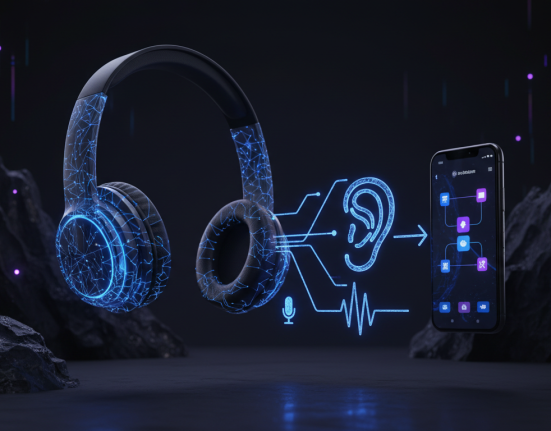
To achieve “Any Role, Any Voice,” the architecture must disentangle speaker identity from linguistic content within the latent space. Technical analysis suggests the utilization of advanced variational autoencoders (VAEs) or flow-matching techniques. By isolating the timbre and prosody vectors, the system can apply a specific voice skin to the output of the LLM without retraining the core transformer weights.
This allows for Parameter-Efficient Fine-Tuning (PEFT) strategies, such as LoRA (Low-Rank Adaptation), where specific “personality adapters” can be swapped in and out of the inference pipeline in milliseconds. This modularity is critical for enterprise applications requiring thousands of distinct agents running on shared GPU clusters.
RAG Optimization for Behavioral Consistency
A recurring failure mode in conversational AI is the “hallucination of character.” An agent meant to be a stoic Victorian doctor might slip into modern slang if the probability distribution shifts. PersonaPlex likely addresses this via Hierarchical RAG.
- Tier 1: Knowledge Retrieval. Standard RAG for factual queries.
- Tier 2: Stylo-metric Retrieval. Retrieving syntactic structures and vocabulary specifically mapped to the target persona.
By forcing the attention mechanism to attend to these stylo-metric references, the model’s output is constrained not just by truth, but by character fidelity. This reduces the entropy of the generation in a way that preserves the illusion of a distinct consciousness.
Inference Latency and Real-Time Interaction
The computational cost of running a high-parameter LLM alongside a high-fidelity neural audio codec is non-trivial. For PersonaPlex to function in real-time environments (such as dynamic NPCs in gaming or interactive avatars), inference latency must be minimized.
Optimizing the Context Window
Techniques such as KV-Cache quantization and speculative decoding play a massive role here. By predicting the acoustic features slightly ahead of the textual generation, the system can stream audio packets before the full sentence is tokenized. This “streaming-first” architecture reduces the Time-to-First-Byte (TTFB) and Time-to-First-Audio (TTFA), creating a seamless conversational flow that mimics human reaction times (approx. 200ms).
Enterprise Applications: The Rise of the Synthetic Workforce
The implications of PersonaPlex extend far beyond entertainment. In the enterprise sector, this technology enables the deployment of brand-specific AI representatives that maintain rigorous adherence to brand voice guidelines while navigating complex customer service scenarios.
Custom Topology for Specialized Domains
Imagine a medical diagnostic bot that not only has access to PubMed via RAG but speaks with the empathetic, measured pacing of a senior clinician. Or a high-frequency trading assistant that communicates with rapid-fire brevity. PersonaPlex facilitates this by allowing organizations to define the “topology” of the interaction—mapping specific roles to specific acoustic profiles without building custom models from scratch.
Technical Challenges and Ethical Guardrails
With high-fidelity impersonation comes high-risk abuse vectors. Deepfakes are the obvious concern, but the subtler danger is social engineering via rapport. An AI that can perfectly modulate its voice to sound trusting or authoritative can manipulate users more effectively than text ever could.
Technical architects must implement watermarking at the acoustic level (imperceptible to humans, detectable by algorithms) and RLHF (Reinforcement Learning from Human Feedback) specifically targeting manipulation resistance. The system must recognize when a user is attempting to jailbreak the persona into performing unauthorized social engineering.
Technical Deep Dive FAQ
How does PersonaPlex differ from standard System Prompts?
Standard system prompts rely on the context window, which is prone to drift and consumes token space. PersonaPlex likely utilizes vector-based identity injection and acoustic embeddings, decoupling character maintenance from the context window for stable, long-term consistency.
What is the impact of PersonaPlex on Inference Latency?
While multimodal generation adds compute load, optimizations like speculative decoding and quantization allow PersonaPlex to function with minimal latency. The system likely streams audio packets in parallel with text token generation to minimize perceived lag.
Can PersonaPlex utilize existing LLM weights?
Yes. Through adapter-based architectures (like LoRA), PersonaPlex can ostensibly layer identity and voice modules over foundational models (like Llama 3 or Nemotron) without requiring a full retraining of the base model weights.
How are “Hallucinations of Character” mitigated?
By utilizing a specialized RAG pipeline that retrieves stylistic and biographical data alongside factual data, the model’s attention heads are constrained to maintain the persona’s specific vocabulary and knowledge boundaries, reducing out-of-character drift.