The Dawn of a Compute Supercycle: Nvidia and Meta’s Strategic Alignment
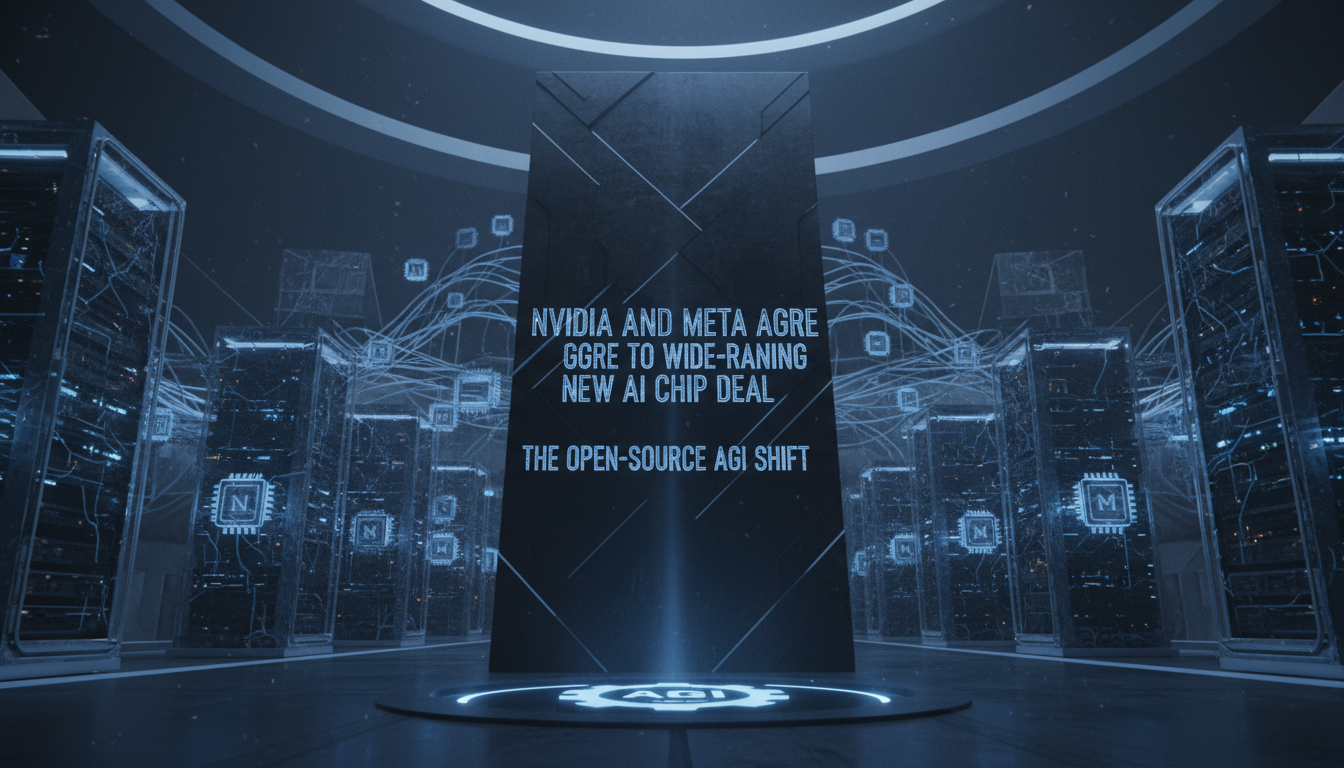
The artificial intelligence landscape has shifted tectonically as Nvidia and Meta agree to wide-ranging new AI chip deal terms that effectively redefine the scale of open-source compute infrastructure. Mark Zuckerberg’s strategic roadmap, recently unveiled, indicates a massive accumulation of compute power—specifically targeting 350,000 Nvidia H100 graphics cards by the end of the year. When combined with other infrastructure, this brings Meta’s total compute capacity to an equivalent of 600,000 H100s. This is not merely a procurement order; it is a declaration of intent in the race toward Artificial General Intelligence (AGI).
For the open-source community, this development is pivotal. Unlike closed-garden competitors such as OpenAI and Google, Meta has championed a philosophy of open weights and accessible models through its Llama series. By securing this unprecedented level of hardware dominance, Meta is positioning itself to train models that dwarf current iterations in parameter count and reasoning capabilities. This article serves as a definitive technical pillar, dissecting the hardware specifications, the strategic maneuvering behind the deal, and the ripple effects this will have on the global AI ecosystem.
Decoding the Deal: Technical Specifications and Hardware Architecture
To understand the magnitude of this agreement, one must look beneath the headlines at the silicon itself. The Nvidia H100 Tensor Core GPU represents the current zenith of AI acceleration. Built on the Hopper architecture, these chips are designed specifically to handle the transformer models that underpin modern Generative AI. Insert chart comparing H100 throughput vs A100 across varying batch sizes here.
The Hopper Architecture Advantage
The H100s included in this wide-ranging deal feature fourth-generation Tensor Cores and the Transformer Engine with FP8 precision. This allows for training speeds up to 9x faster than the previous generation (A100) for massive mixture-of-experts (MoE) models. For Meta, this means the training cycles for Llama 4 and subsequent AGI-level models will be drastically reduced, allowing for faster iterative loops.
- Memory Bandwidth: The H100 delivers 3.35 TB/s of memory bandwidth, a critical metric for feeding large language models (LLMs) the vast datasets required for pre-training.
- NVLink Switch System: This technology allows up to 256 H100s to connect, functioning as a single giant GPU. This interconnectivity is vital for Meta’s massive clusters.
- Power Efficiency: Despite their power, H100s offer better performance-per-watt compared to predecessors, though the aggregate energy demand for 350,000 units remains a significant engineering hurdle.
Looking Toward Blackwell: The B200 Upgrade Path
While the current narrative focuses on the H100 accumulation, industry analysts suggest that this wide-ranging deal likely includes provisions for Nvidia’s next-generation Blackwell (B200) architecture. The B200 promises to further exponentially increase inference and training performance. By locking in supply chains now, Meta ensures it remains at the front of the line for future hardware revisions, mitigating the risk of supply shortages that have plagued the industry during previous crypto and AI boom cycles.
Impact on the Open-Source AI Ecosystem
The intersection where Nvidia and Meta agree to wide-ranging new AI chip deal parameters is exactly where the future of open-source AI will be decided. The sheer volume of compute available to Meta enables the training of “frontier models” that can then be distilled or released as open weights to the community. This trickle-down effect creates a robust ecosystem where developers do not need to build foundation models from scratch but can fine-tune state-of-the-art architectures.
Fueling Llama 4 and the Path to AGI
Llama 3 has already set benchmarks for open-source performance. With the influx of 600,000 H100-equivalent compute, Llama 4 is expected to push boundaries in multimodal reasoning, long-context understanding, and code generation. The reporting structure around these releases typically involves a phased rollout—starting with smaller parameter counts (e.g., 7B, 70B) and culminating in massive 400B+ parameter models.
This hardware acquisition suggests that Meta is not just aiming to compete with GPT-4 but to surpass it with a model that is arguably “open.” This strategy forces competitors to reconsider their moats; if the best model is free and runs on standard enterprise hardware (eventually), the value proposition of closed APIs diminishes. Insert diagram illustrating the flow of compute from training clusters to open-source repositories here.
Democratizing Access vs. Centralizing Infrastructure
A paradox emerges here: while the software outputs (models) are being democratized, the hardware inputs (H100 clusters) are becoming increasingly centralized. Only a handful of entities—Meta, Microsoft, Google, Amazon—can afford a capex spend of this magnitude. This centralization of infrastructure means that while independent researchers can fine-tune models, the capability to pre-train frontier models remains in the hands of Big Tech. This deal solidifies Meta as the benevolent dictator of the open-source world, providing the tools that others cannot afford to build.
Strategic Rivalry: The Scorched Earth Compute Strategy
Mark Zuckerberg’s move can be described as a “scorched earth” strategy regarding compute availability. By soaking up a significant percentage of Nvidia’s supply, Meta deprives competitors of the necessary resources to scale at the same pace. This is a classic supply chain dominance maneuver.
The Race Against Closed Source
OpenAI and Google have traditionally relied on their proprietary advantage. However, as Nvidia and Meta agree to wide-ranging new AI chip deal terms, the gap in raw training capacity narrows. Meta’s integration of AI into its massive user platforms (Instagram, WhatsApp, Facebook) also provides a unique feedback loop. The data generated by billions of users can be processed by these H100 clusters to refine models in real-time, a form of audience engagement that purely B2B AI companies lack.
Furthermore, this deal signals to investors that Meta is pivoting from a pure social media company to a hardcore deep tech infrastructure play. The capital expenditure is high, but the potential ROI from dominating the AGI platform layer is astronomical.
Infrastructure and Engineering Challenges
Acquiring 350,000 H100s is one thing; plugging them in is another. The engineering challenges associated with this deal are monumental.
Data Center Energy and Cooling Demands
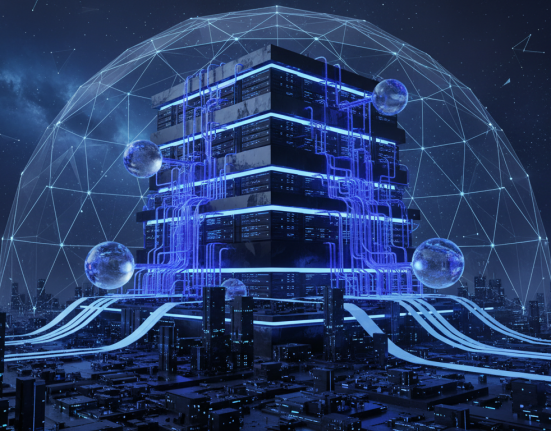
An H100 GPU can consume up to 700 watts. When deployed in clusters of thousands, the heat density surpasses what traditional air cooling can handle. This necessitates a shift toward liquid cooling solutions, likely utilizing direct-to-chip or immersion cooling technologies. Meta has been redesigning its data centers for AI workloads, but the timeline for bringing this capacity online is tight.
Energy consumption is another critical vector. A cluster of this size demands gigawatts of power, requiring strategic partnerships with utility providers and potential investments in renewable energy sources to meet carbon neutrality goals. Investigative reporting into data center locations reveals a trend of moving toward regions with cheaper, cleaner power, even if latency increases slightly.
Networking and The Infiniband Factor
To train models across thousands of GPUs, latency between chips must be minimized. Nvidia’s Quantum-2 InfiniBand platform is the industry standard for these workloads. It is highly likely that the deal includes not just GPUs, but the full networking stack. However, Meta has also been a proponent of Ethernet-based AI networking (RoCE). Watching how they balance Nvidia’s proprietary networking with open standards will be a key area for technical analysis.
The Narrative: Editorial Strategy and Market Perception
The announcement of this deal was not a dry press release; it was a carefully orchestrated piece of multimedia news. Zuckerberg utilized Instagram Reels to announce the roadmap, signaling a shift in editorial strategy where CEOs bypass traditional media gatekeepers to speak directly to the public and developers. This news pacing allows Meta to control the narrative, framing the massive spend as a commitment to open science rather than a corporate power grab.
For tech journalists, source verification becomes crucial. While the headline number of 350,000 H100s is impressive, verifying the deployment timeline and the actual allocation (research vs. product features) requires deep digging. Feature storytelling in this domain must move beyond the specs and explore the human impact: how will these chips change the way developers work? What new applications become possible when inference costs drop due to better hardware optimization?
Furthermore, the audience engagement metrics on these announcements suggest a high hunger for technical transparency. Developers want to know not just that Meta has the chips, but how they are configuring them. Will they release logs of their training runs? Will they share the recipes for their infrastructure setup? This is where OpenSourceAI News will continue to press for details, ensuring that the “open” in open-source applies to knowledge sharing, not just model weights.
Future Roadmap: Beyond the H100
The industry moves fast. As Nvidia and Meta agree to wide-ranging new AI chip deal specifics for the current generation, R&D labs are already validating the next. We expect to see:
- Custom Silicon: Meta has introduced its own MTIA (Meta Training and Inference Accelerator) chips. While they currently offload inference, future iterations might take on more training workloads to reduce reliance on Nvidia.
- AGI Timeline Acceleration: With this hardware, the window for achieving human-level reasoning in specific domains shrinks from decades to years.
- Sovereign AI Clouds: Meta’s infrastructure could eventually function as a sovereign cloud for open-source projects, offering compute grants to universities and non-profits to ensure AI development isn’t solely profit-driven.
This deal is a defining moment in the history of computation. It represents the industrialization of AI, moving from experimental labs to massive, power-hungry factories of intelligence.
Frequently Asked Questions – FAQs
What is the significance of the Nvidia and Meta chip deal?
The deal signifies a massive investment in AI infrastructure, with Meta aiming to acquire 350,000 H100 GPUs. This cements Meta’s position as a leader in open-source AI and provides the raw compute power necessary to train next-generation models like Llama 4 and pursue AGI.
How does this deal impact open-source AI?
It is largely positive for the open-source community. Meta uses its compute resources to train high-performance models which it then releases (often with open weights) to the public. This democratizes access to state-of-the-art AI technology that would otherwise be locked behind paid APIs.
What are the Nvidia H100 GPUs used for?
The Nvidia H100 is designed for high-performance computing and AI. It accelerates the training of Large Language Models (LLMs) and generative AI applications by processing vast amounts of data in parallel using Transformer Engine technology.
Will this deal affect the availability of GPUs for other companies?
Likely, yes. With Meta absorbing a significant portion of the global supply of H100s, smaller players and competitors may face extended lead times or supply shortages, intensifying the competition for AI hardware.
What is AGI and how does this deal relate to it?
AGI (Artificial General Intelligence) refers to AI systems that possess the ability to understand, learn, and apply knowledge across a wide variety of tasks, much like a human. Mark Zuckerberg has explicitly stated that Meta’s long-term goal is to build AGI, and this massive hardware acquisition is the foundational step to support the computational intensity required for such a breakthrough.