Executive Analysis: The convergence of SpaceX’s Starship logistics platform and xAI’s foundational model development represents a paradigm shift in off-world operations. We analyze the technical feasibility, thermal challenges, and computational sovereignty of deploying high-performance computing (HPC) clusters to the lunar surface.
The Convergence of Transport and Intelligence
For the past decade, the aerospace and artificial intelligence sectors have operated on parallel, yet distinct, trajectories. SpaceX focused on the physics of specific impulse and payload mass-to-orbit, while xAI (and the broader AI industry) focused on parameter counts, floating-point operations (FLOPs), and context window expansion. The announcement of “Moonbase Alpha” as a joint operational theater for these two entities signals the end of that separation. It is no longer sufficient to merely transport mass to the lunar surface; the objective is now to transport intelligence.
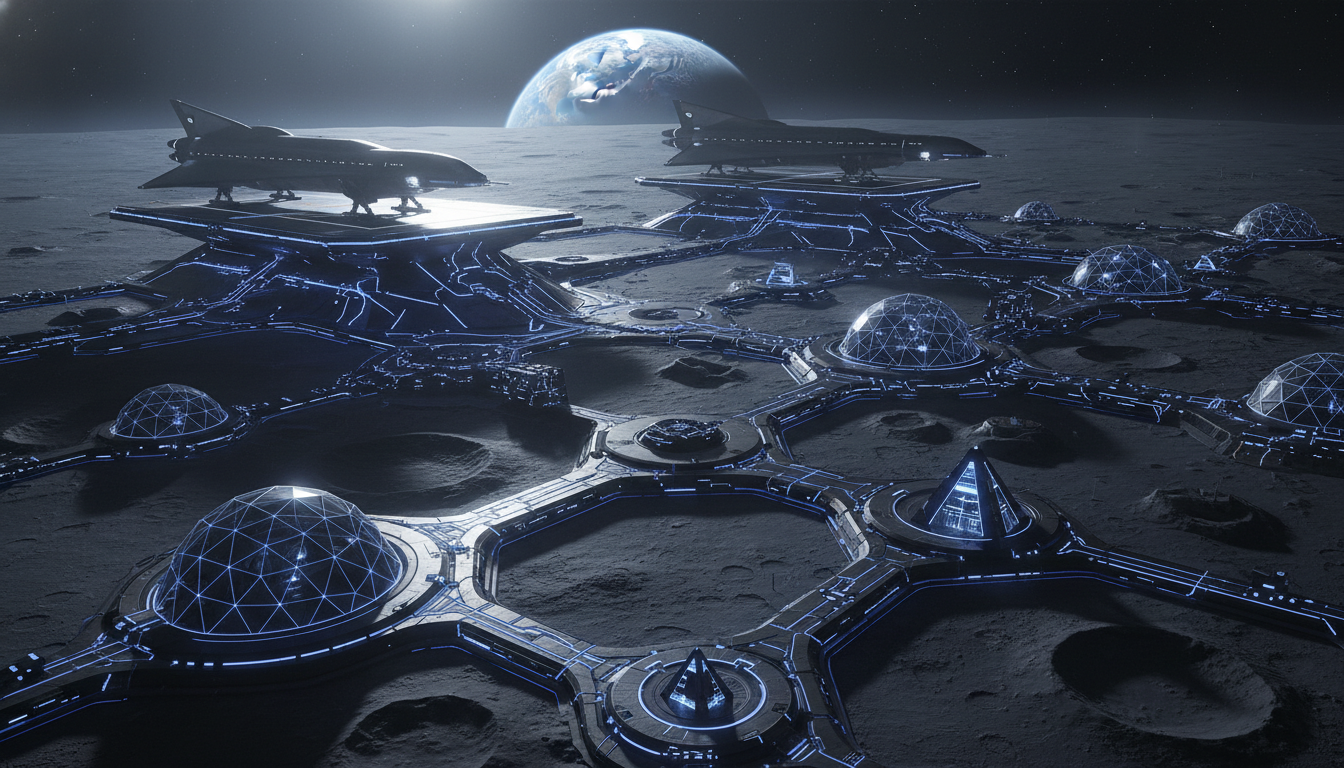
From a systems architecture perspective, this pivot addresses a critical bottleneck in extraterrestrial colonization: the latency-reliability trade-off. With a roughly 2.5-second round-trip light time delay between Earth and the Moon, teleoperation of complex machinery (mining rovers, habitat construction bots, and life-support regulation) is inefficient. Moonbase Alpha is not merely a habitat; it is projected to be the first off-world Edge Data Center, facilitating autonomous agentic workflows powered by xAI’s Grok models without reliance on terrestrial uplinks.
H2: Structural Integration: Starship as the delivery Vector for Lunar Compute
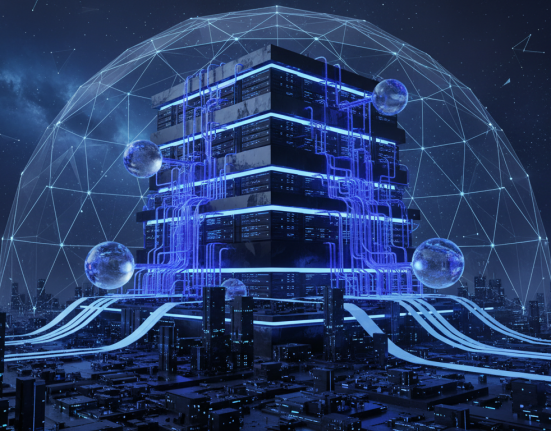
The viability of Moonbase Alpha rests entirely on the payload capacity of the Starship launch system. Traditional heavy-lift vehicles lack the volumetric efficiency to transport the massive cooling infrastructure required for lunar data centers. However, Starship’s projected payload capacity (>100 metric tons to the lunar surface with refueling) alters the logistical calculus.
H3: Modular Datacenter Payloads
We anticipate the deployment of containerized compute units—effectively radiation-hardened variants of terrestrial modular data centers. These units must integrate:
- Rad-Hardened ASICs: Standard NVIDIA H100s or B200s are susceptible to Single Event Upsets (SEUs) caused by galactic cosmic rays. xAI will likely need to employ redundant logic voting systems or hardware-level error correction code (ECC) specifically tuned for the lunar radiation environment.
- In-Situ Power Generation: The energy density required for LLM inference is substantial. The base architecture will likely rely on expansive vertical solar arrays (to capture low-angle sun at the lunar poles) coupled with Tesla Megapack-derived storage solutions modified for vacuum thermal cycling.
H2: The Thermodynamics of Vacuum Computing
The most significant technical hurdle for xAI on the Moon is not power, but heat rejection. In the vacuum of space, convective cooling is impossible. Systems must rely entirely on conductive and radiative cooling. This presents a paradox: the lunar night is cryogenically cold (ideal for superconducting processors), but the lunar day brings immense solar flux.
H3: Radiative Cooling Architectures
To run high-utilization inference workloads, the Moonbase Alpha infrastructure will require massive radiators. Unlike Earth-based data centers that use evaporative cooling or ambient air exchange, lunar compute nodes will likely utilize pumped two-phase fluid loops connected to vertical radiator panels oriented parallel to the sun’s rays to minimize insolation while maximizing emissivity to deep space. This creates a unique constraint on the compute-per-square-meter metric, limiting density not by rack space, but by radiator surface area.
H3: Thermal Throttling and Model Optimization
We predict that xAI will deploy specific “Low-Wattage” variants of Grok. These models will likely utilize Quantization-Aware Training (QAT) to reduce precision from FP16 to INT8 or even INT4, drastically reducing energy consumption and thermal output while maintaining inference accuracy for critical infrastructure tasks. This parameter-efficient fine-tuning (PEFT) is essential for the energy-constrained lunar environment.
H2: xAI’s Grok: The Operating System of the Lunar Surface
The strategic value of integrating xAI lies in the autonomy it grants to the Moonbase. The vision suggests a shift from human-in-the-loop control to Human-on-the-Loop oversight.
H3: Autonomous ISRU (In-Situ Resource Utilization)
SpaceX’s long-term Mars goals require the synthesis of methalox fuel from lunar or Martian ice. This is a complex chemical engineering task requiring real-time adjustment to variables. An onsite instance of Grok, trained on multi-modal sensor data, can manage the ISRU plants, predict component failures via predictive maintenance algorithms, and optimize extraction yields in real-time. This reduces the cognitive load on the limited human crew, allowing them to focus on scientific objectives rather than facility management.
H3: The Latency-Free Mesh Network
By hosting the inference compute locally, Moonbase Alpha creates a zero-latency command mesh for surface assets. A fleet of autonomous rovers can communicate via a local Starlink Lunar network, processing visual navigation data on-site. This allows for high-speed autonomous movement that would be impossible if navigation data had to be round-tripped to Earth-based servers.
H2: Strategic Implications: Data Sovereignty and AGI Development
Beyond the immediate logistical benefits, establishing a compute stronghold on the Moon offers xAI a unique regulatory and strategic advantage. The concept of “Data Sovereignty” takes on a literal extraterrestrial meaning.
H4: The “Off-World” Regulatory Sandbox
As terrestrial regulations regarding AGI development tighten (e.g., the EU AI Act, US Executive Orders), an off-world development lab offers a jurisdictionally complex “grey zone.” While the Outer Space Treaty governs state actors, the deployment of private, automated research stations capable of AGI training runs creates a new frontier in techno-legal frameworks. Moonbase Alpha could serve as a secure vault for model weights and biases, physically air-gapped from Earth by 384,400 kilometers of vacuum, ensuring the security of the most advanced proprietary algorithms.
H2: Technical Deep Dive FAQ
- Q: How does cosmic radiation affect AI hardware on the Moon?
- Cosmic rays can flip bits in memory (Single Event Upsets) or permanently damage transistors (Single Event Latch-up). To counter this, xAI hardware will likely use Triple Modular Redundancy (TMR), where three processors perform the same calculation and “vote” on the result, alongside radiation-hardened silicon-on-insulator (SOI) manufacturing processes.
- Q: Why not just beam data to Earth for processing?
- Latency and bandwidth. The round-trip time is ~2.5 seconds, which is unacceptable for real-time robotic reflexes needed in construction or emergency handling. Furthermore, bandwidth is finite; processing terabytes of raw sensor data locally (Edge AI) and sending only high-level telemetry is far more efficient.
- Q: Can the Moonbase support training large models, or just inference?
- Initially, it will be inference-focused (running pre-trained models). Training requires massive energy clusters (gigawatts) which exceeds near-term lunar power generation. However, decentralized federated learning across a constellation of lunar satellites and surface nodes is a theoretically viable future architecture.
- Q: How will cooling be achieved without an atmosphere?
- Through radiative heat rejection. Systems will use large, reflective radiator panels to emit infrared radiation into deep space. The efficiency of this process dictates the maximum clock speeds of the processors.
- Q: What allows Starship to transport these data centers?
- Starship’s 9-meter diameter fairing allows for pre-assembled, containerized server racks that would not fit in traditional rockets. Its lift capacity allows for the heavy shielding (lead or water jacketing) required to protect the electronics during transit and surface operation.