The Scale of the Incident: A Wake-Up Call for Fintech Security
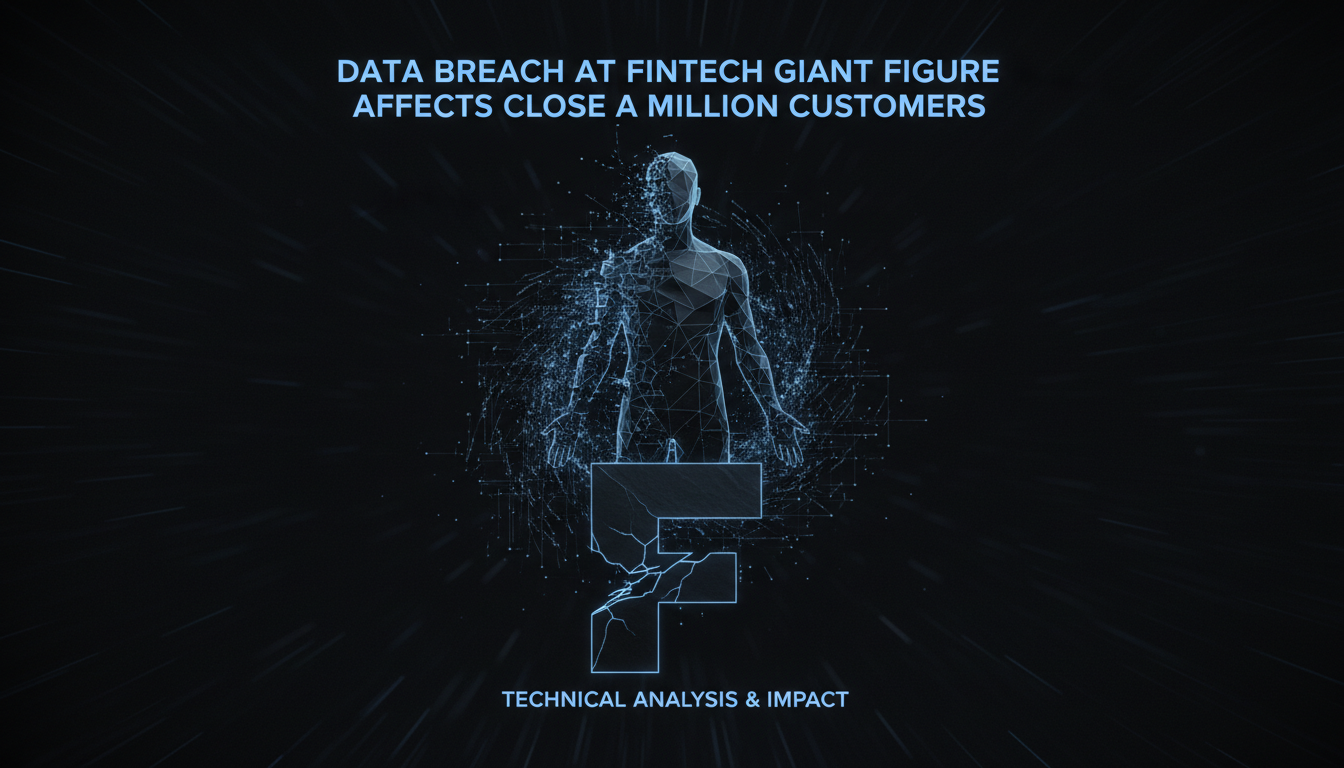
The landscape of financial technology has been shaken by the confirmation that a data breach at fintech giant Figure affects close to a million customers. This incident is not merely a statistical anomaly in the cybersecurity logs of 2024; it represents a critical juncture for the industry’s approach to data sovereignty, third-party risk management, and the integration of artificial intelligence in threat detection. As Figure Technologies—known for its innovative use of blockchain for home equity lines of credit (HELOC)—navigates the fallout, the broader tech community must dissect the anatomy of this breach to prevent recurrence.
Reports indicate that the breach exposed sensitive Personally Identifiable Information (PII), ranging from social security numbers to loan histories. For a company that prides itself on the immutable security of blockchain technology, this event underscores a vital lesson: the chain is only as strong as its weakest endpoint. In this comprehensive analysis, we explore the technical vectors likely exploited, the implications for open-source security protocols, and the necessary evolution of AI-driven defense mechanisms.
Fintech entities are high-value targets. The aggregation of high-fidelity financial data makes them lucrative prey for state-sponsored actors and sophisticated cybercrime syndicates. This incident serves as a stark reminder that innovation in financial products must be matched, if not exceeded, by innovation in security architecture. Below, we break down the breach mechanics, the regulatory aftermath, and the path forward for the industry.
Deconstructing the Breach: Attack Vectors and Vulnerabilities
While the forensic investigation is ongoing, industry experts often point to specific vectors common in breaches of this magnitude. Understanding these helps in formulating robust defenses.
1. API Vulnerabilities and Broken Access Control
Modern fintech platforms rely heavily on Application Programming Interfaces (APIs) to connect various microservices. A common failure point is Broken Object Level Authorization (BOLA), where an attacker manipulates the ID of an object sent within an API request. If the server does not properly validate that the logged-in user has permission to access the requested data, massive exfiltration can occur.
In the context of the data breach at fintech giant Figure, analysts are scrutinizing whether legacy endpoints were left exposed. Insert diagram illustrating API BOLA attack flow here. Secure coding practices and rigorous API gateway configurations are essential to mitigate this risk.
2. Supply Chain and Third-Party Risk
Figure, like many fintech giants, operates within a complex ecosystem of vendors, from credit bureaus to cloud storage providers. A compromise in a third-party vendor can bypass the primary target’s fortified perimeter. This “island hopping” strategy allows attackers to leverage the trust relationship between systems. If the breach originated from a vendor’s compromised credentials, it highlights the need for zero-trust architectures where no internal or external entity is trusted by default.
3. Credential Stuffing and Social Engineering
Despite advanced biometric security, simple credential stuffing—using passwords leaked from other breaches—remains effective. If users reused passwords and Multi-Factor Authentication (MFA) was not enforced strictly across all access points, attackers could have gained initial entry with minimal technical effort. This vector is often augmented by AI-generated phishing campaigns, which create highly convincing communications to trick employees into revealing access tokens.
The Role of Open-Source Intelligence (OSINT) in Detection
The discovery of such breaches often stems from the diligent work of the white-hat community and open-source AI projects dedicated to cybersecurity. Researchers monitoring dark web forums often identify dumps of proprietary data before the victim company is even aware of the intrusion.
Open-source tools like Wazuh (SIEM) and Snort (IDS) play a pivotal role in the democratization of security. By allowing community-driven rule sets, these platforms can adapt faster than proprietary black-box solutions. In the aftermath of the Figure breach, many CISOs are re-evaluating their reliance on closed-source security stacks, moving toward hybrid models where open-source transparency aids in auditing code for backdoors or vulnerabilities.
Data Governance and the Blockchain Paradox
Figure Technologies is renowned for its use of the Provenance Blockchain. This brings up an interesting paradox: while the blockchain ledger itself is immutable and secure, the “off-chain” databases storing user PII remain vulnerable to traditional SQL injection or server misconfiguration.
- On-Chain Data: Transaction hashes, smart contract interactions (typically secure).
- Off-Chain Data: Names, physical addresses, SSNs (vulnerable).
The breach demonstrates that decentralization does not automatically equate to total security. The bridge between Web2 (traditional databases) and Web3 (blockchain) is often the most fragile point. Future fintech architectures must focus on Zero-Knowledge Proofs (ZKPs), allowing verification of user eligibility (e.g., creditworthiness) without ever storing, or even revealing, the underlying raw data.
Impact Analysis: Regulatory and Financial Fallout
The repercussions of the data breach at fintech giant Figure extend far beyond immediate remediation costs. The regulatory landscape has tightened significantly in recent years.
SEC Cybersecurity Disclosure Rules
New regulations by the U.S. Securities and Exchange Commission (SEC) mandate that public companies disclose material cybersecurity incidents within four business days. While Figure is a private unicorn, the pressure for transparency affects the entire sector. Investors are increasingly demanding cybersecurity audits as part of due diligence.
GDPR and CCPA Compliance
With “close to a million customers” affected, the geographic distribution of these users triggers various data protection laws. Under the California Consumer Privacy Act (CCPA), damages can range from $100 to $750 per consumer per incident, potentially amounting to hundreds of millions in liability. This financial threat forces companies to view cybersecurity not as an IT cost, but as a balance sheet liability.
AI-Driven Defense: The Next Frontier
To combat the sophistication of modern attacks, the integration of Artificial Intelligence into defense strategies is non-negotiable. AI research trends indicate a shift from signature-based detection to behavioral analysis.
1. Anomaly Detection
Machine Learning models trained on baseline network traffic can identify subtle deviations that human analysts might miss. For instance, if a database query that usually returns 10 rows suddenly returns 10,000, an AI system can instantly terminate the session. Implementing such active defense measures is crucial for preventing mass data exfiltration.
2. Automated Incident Response
Speed is critical. AI-driven Security Orchestration, Automation, and Response (SOAR) platforms can isolate compromised endpoints within milliseconds of detection. In the case of the Figure breach, an automated response system might have contained the threat to a single server cluster rather than allowing lateral movement across the network.
3. Adversarial AI
Conversely, defenders must prepare for attackers utilizing AI. Automated vulnerability scanners powered by LLMs can probe firewalls 24/7, finding cracks in logic that traditional scanners miss. This arms race necessitates a continuous investment in defensive AI capabilities.
Remediation Strategies for Affected Customers
For the close to a million customers impacted, immediate action is required. Financial institutions usually offer credit monitoring, but proactive personal security hygiene is vital.
- Freeze Credit Reports: Locking access at the three major bureaus prevents new lines of credit from being opened.
- Rotate Credentials: Changing passwords and updating API keys for connected financial apps.
- Enable Hardware MFA: Moving from SMS-based 2FA to hardware keys (like YubiKeys) to prevent SIM-swapping attacks.
Fintech companies must also improve their communication strategies. Transparency builds trust. Hiding the extent of a breach until leaked data appears on the dark web destroys reputation faster than the breach itself.
The Future of Fintech: Security by Design
The data breach at fintech giant Figure affects close to a million customers, but it also serves as a catalyst for industry-wide reform. We are moving toward an era of “Security by Design,” where security is not a wrapper applied after development, but a fundamental component of the code.
This involves shifting left in the DevOps lifecycle—integrating security testing into the CI/CD pipeline. It also involves the adoption of multimedia news strategies to educate users about phishing and social engineering, as human error remains a top vulnerability.
Furthermore, the convergence of AI and blockchain offers hope. Decentralized Identity (DID) standards could eventually eliminate the need for centralized databases of PII, rendering breaches of this nature mathematically impossible. Until then, rigorous vigilance, open-source collaboration, and advanced AI defense remains our best shield.
Strategic Takeaways for CTOs and CISOs
Leadership in the fintech space must digest the following action items derived from this incident:
- Audit API Inventories: Ensure no “zombie” APIs are active and unmonitored.
- Vendor Risk Assessments: Re-evaluate the security posture of all third-party data processors.
- Drill Incident Response Plans: Conduct tabletop exercises simulating massive data exfiltration to test the speed and efficacy of current protocols.
- Invest in AI Security: Deploy behavioral analytics to detect threats that bypass static firewalls.
In conclusion, while the breach at Figure is a significant blow, the resilience of the fintech sector relies on its ability to learn and adapt. By leveraging the power of open-source intelligence and advanced AI, the industry can fortify itself against the inevitable next wave of cyber threats.
Frequently Asked Questions – FAQs
What exactly happened in the data breach at fintech giant Figure?
While specific forensic details are often withheld during active investigations, reports confirm that unauthorized actors gained access to systems containing the personal and financial data of nearly one million customers. The breach likely involved exploitation of vulnerabilities in third-party integrations or API endpoints, allowing attackers to exfiltrate sensitive PII.
What data was exposed in the Figure breach?
The exposed data typically includes Personally Identifiable Information (PII) such as names, addresses, social security numbers, loan details, and potentially bank account numbers. This data poses a high risk for identity theft and financial fraud.
How can I check if my data was affected?
Figure Technologies is required to notify affected individuals directly via mail or email. Additionally, customers can monitor their credit reports or use reputable data breach notification services (like Have I Been Pwned, once the data is indexed) to verify exposure.
Does this breach affect the blockchain assets held by Figure?
Generally, blockchain assets themselves are secured by private keys and distributed ledger technology. However, if the breach involved the theft of private keys or wallet credentials stored in centralized databases (hot wallets), assets could be at risk. Most consumer data breaches affect the “off-chain” personal data rather than the immutable ledger records.
What steps should Figure customers take immediately?
Customers should immediately freeze their credit with Equifax, Experian, and TransUnion. They should also change passwords for their Figure accounts and any other accounts sharing the same credentials, enable Multi-Factor Authentication (MFA), and remain vigilant against phishing emails claiming to be from Figure support.
How does OpenSourceAI News cover such breaches?
We analyze breaches through a technical and future-looking lens, focusing on how open-source security tools and AI methodologies can be used to prevent such incidents. We prioritize deep technical analysis over sensationalism.