Architecting the Edge: A Systems-Level Analysis of the $10 Billion Microsoft Japan AI Investment
From the vantage point of systems architecture and frontier machine learning research, the recently finalized Microsoft Japan AI investment represents far more than a geopolitical financial deployment; it is a foundational reconfiguration of the Asia-Pacific compute topology. As large language models (LLMs) scale exponentially—moving from billions to trillions of parameters—the physical infrastructure required to sustain training pipelines, manage weights and biases, and serve low-latency inference must evolve correspondingly. Microsoft’s unprecedented $10 billion capitalization into Japan’s artificial intelligence and cybersecurity grid signals a profound architectural shift. This initiative fundamentally addresses the physical and algorithmic bottlenecks that currently gatekeep sovereign AI deployments, specifically targeting hyper-localized Transformer architecture optimization, resilient distributed computing networks, and military-grade adversarial machine learning defenses.
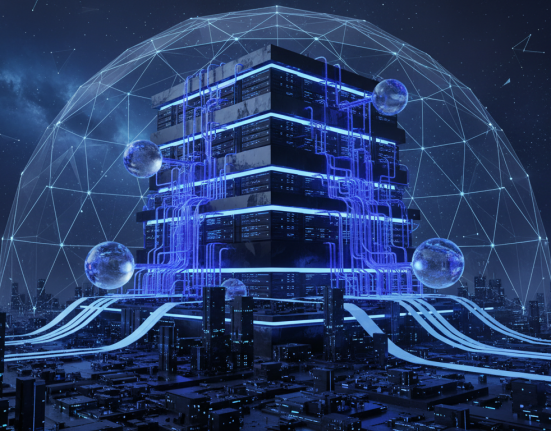
By deploying localized hyperscale data centers across the Kanto and Kansai regions, this initiative mitigates the physics-bound constraints of transatlantic and transpacific data routing, aiming to achieve sub-millisecond inference latency for enterprise-grade generative AI models. This technical pillar page decompiles the strategic, hardware, and algorithmic dimensions of this deployment, analyzing how this infrastructural leap will catalyze innovations in Parameter-Efficient Fine-Tuning (PEFT), advanced Retrieval-Augmented Generation (RAG) optimization, and secure AI execution environments over the next decade.
H2: Hardware Topologies and Compute Density Scale-Out
The core of the Microsoft Japan AI investment is anchored in a massive expansion of bare-metal compute capacity. Modern deep learning, particularly the pre-training phases of dense Transformer networks, requires highly orchestrated, non-blocking network topologies. Traditional cloud environments, optimized for stateless microservices, falter under the synchronous, high-bandwidth demands of gradient all-reduce operations across thousands of GPUs.
H3: Infiniband Networks and Distributed Training Infrastructures
To support next-generation foundational models, Microsoft is architecting compute clusters utilizing high-radix NVLink domains interconnected via 400Gbps and 800Gbps NVIDIA Quantum-2 InfiniBand switches. This specific hardware matrix is engineered to minimize the tail latency of inter-node communication. When distributing a 500-billion parameter model across compute shards using techniques like Fully Sharded Data Parallel (FSDP) or Megatron-Turing NLG’s 3D parallelism (tensor, pipeline, and data parallelism), network bandwidth becomes the primary bottleneck. By establishing physically localized, dedicated AI zones in Japan, Microsoft dramatically reduces the optical fiber distance between primary storage arrays and GPU memory buses, allowing for higher saturation of High Bandwidth Memory (HBM3e) and significantly higher teraFLOP utilization rates.
H3: Addressing Inference Latency and the KV-Cache Bottleneck
While training requires massive batch processing, inference demands instantaneous throughput. For Japanese financial institutions, automotive manufacturers, and robotics firms leveraging this new infrastructure, inference latency is a critical metric. The deployment will likely feature specialized inference accelerators and aggressively optimized vLLM serving engines. A key technical hurdle in scaling LLM inference is managing the Key-Value (KV) cache—the memory footprint required to store past token representations during autoregressive generation. Localized data centers equipped with specialized hardware routing protocols will enable techniques such as PagedAttention, which dynamically allocates KV-cache memory in non-contiguous blocks, minimizing memory fragmentation and allowing enterprise API consumers to run high-context-window models (e.g., 128k to 1 million tokens) without encountering out-of-memory (OOM) fatal errors or severe degradation in time-to-first-token (TTFT).
H2: Algorithmic Sovereignty: Localizing the Transformer Architecture
A critical, often under-analyzed component of the Microsoft Japan AI investment is the drive toward linguistic and cultural algorithmic sovereignty. Existing state-of-the-art models are predominantly trained on English-heavy corpora. Applying these models to the Japanese language inherently introduces inefficiencies at the tokenization layer.
H3: Multi-Lingual Tokenization and Byte-Pair Encoding (BPE) Efficiency
The standard Transformer architecture relies on Byte-Pair Encoding (BPE) or SentencePiece algorithms to compress raw text into integer tokens. For Japanese—a language utilizing a complex mixture of Kanji, Hiragana, and Katakana—English-optimized tokenizers are highly inefficient. A single Japanese character might be split into three or four separate byte-level tokens. This architectural mismatch artificial inflates the sequence length, pushing models closer to their maximum context limits, increasing inference latency, and quadratically increasing the computational cost of the self-attention mechanism (which scales as O(N^2) with respect to sequence length N). Microsoft’s localized compute investment enables the parallelized pre-training of newly optimized tokenizers and embeddings specifically calibrated for Japanese semantic structures, fundamentally altering the efficiency curve for regional enterprise AI.
H4: RAG Optimization for Japanese Enterprise Ecosystems
Retrieval-Augmented Generation (RAG) has become the de facto standard for injecting proprietary, external knowledge into frozen LLMs, thereby reducing hallucinations. However, RAG optimization requires highly precise dense vector embeddings. Through this investment, Microsoft is laying the groundwork for sovereign embedding models that map Japanese technical, legal, and medical jargon into high-dimensional vector spaces with unparalleled accuracy. Advanced RAG pipelines deployed on these new clusters will utilize hybrid search mechanisms—combining sparse lexical retrieval (like BM25 optimized for Japanese morphological analysis via tools like MeCab) with dense bi-encoder models. By hosting both the vector databases (e.g., Azure AI Search) and the embedding models physically in Japan, Microsoft eliminates cross-border data transfer compliance risks while reducing the round-trip time for multi-hop reasoning tasks.
H4: Parameter-Efficient Fine-Tuning (PEFT) on Edge Nodes
Not every enterprise requires pre-training a model from scratch. The infrastructure built through the Microsoft Japan AI investment will heavily democratize access to Parameter-Efficient Fine-Tuning (PEFT) methodologies, particularly Low-Rank Adaptation (LoRA) and Quantized LoRA (QLoRA). By freezing the core model weights and biases and only updating low-rank decomposition matrices, Japanese corporations can domain-adapt massive models using localized, secure GPU enclaves. This allows an automotive giant to inject proprietary engineering manuals into a coding assistant without exposing their intellectual property to global, multi-tenant model updates. The localization of these fine-tuning pipelines ensures that the gradient descent operations never leave Japanese sovereign soil.
H2: The Cybersecurity Fabric: Defending Neural Architectures
The injection of billions of dollars into AI cannot be decoupled from cybersecurity. As models become integral to national infrastructure, they become prime targets for highly sophisticated, state-sponsored cyber-kinetic attacks. Microsoft’s allocation heavily weights the integration of AI-driven threat intelligence and the protection of the AI models themselves—a discipline known as Adversarial Machine Learning.
H3: Securing Weights and Biases via Zero-Trust Data Planes
The most valuable assets in the modern technological landscape are the floating-point numbers that constitute a trained neural network’s weights and biases. If an adversary gains access to the underlying storage buckets of a model, they can perform model extraction, inversion attacks, or inject subtle backdoors (data poisoning) into the training pipeline. The Microsoft Japan AI investment includes the rollout of next-generation Zero-Trust architectural grids surrounding the AI data plane. This involves confidential computing paradigms where data is encrypted not only at rest and in transit but also during processing. Utilizing hardware-level Trusted Execution Environments (TEEs) on the GPUs and CPUs ensures that even if the hypervisor is compromised, the cryptographic integrity of the model matrices remains inviolable.
H3: Automated AI-Driven Threat Hunting Networks
Conversely, the massive compute grid will host AI models purpose-built for defensive cybersecurity. Traditional Security Information and Event Management (SIEM) systems are deterministic and rules-based, failing against polymorphic malware and zero-day zero-click exploits. Microsoft is deploying deep learning models trained on global telemetry data to act as autonomous defensive agents. These models utilize graph neural networks (GNNs) to map active directory topologies, instantly identifying anomalous lateral movement or privilege escalation attempts within corporate networks. The localized nature of the Tokyo and Osaka clusters ensures these defensive models can ingest and analyze petabytes of local log data with zero-latency, allowing for automated, millisecond-response containment protocols.
H2: Human Capital and the Engineering Pipeline
Advanced silicon and optimized algorithms remain inert without elite engineering capital to direct them. Recognizing the global shortage of specialized AI architects, MLops engineers, and hardware topologists, Microsoft’s strategy encompasses a profound upskilling initiative. This is not surface-level coding instruction; it is deep, systems-level engineering training. The objective is to cultivate a localized workforce capable of managing distributed tensor computations, optimizing CUDA kernels for custom Japanese inference workflows, and architecting resilient data pipelines for continuous pre-training. This synergistic approach ensures that the hardware utilization does not stagnate due to a lack of technical expertise, driving a self-sustaining ecosystem of frontier AI research and development within the region.
H2: Technical Deep Dive FAQ
- What is the impact of the Microsoft Japan AI investment on regional inference latency?
- By establishing geographically localized compute nodes in Kanto and Kansai, the investment drastically reduces the physical optical fiber routing distance. For enterprise applications reliant on real-time API calls, this reduces round-trip times from roughly 100-150ms (transpacific to US-West) to sub-10ms, which is critical for synchronous RAG operations and real-time agentic loop execution.
- How does this infrastructure support Parameter-Efficient Fine-Tuning (PEFT)?
- The localized high-performance computing (HPC) clusters allow Japanese enterprises to utilize techniques like LoRA to inject domain-specific data into foundational models. Because the compute is localized, highly sensitive corporate data used for updating the low-rank matrices never crosses international borders, strictly adhering to national data sovereignty and compliance regulations.
- Why is tokenization a critical factor for Japanese LLM deployments?
- Standard tokenizers (like those used in GPT-4) are heavily biased towards Latin script, meaning Japanese characters are often fractured into multiple byte-level tokens. This inflates the context window usage and slows down autoregressive generation. The new compute infrastructure enables the localized training of custom SentencePiece models and embeddings that natively understand Japanese morphological structures, vastly improving computational efficiency.
- What specific adversarial machine learning defenses are being integrated?
- Microsoft is deploying confidential computing architectures using Trusted Execution Environments (TEEs) directly at the GPU level. This protects the model’s weights and biases from extraction attacks and memory scraping, while robust MLOps pipelines ensure immutable, cryptographically signed training data to prevent adversarial data poisoning and backdoor injections.
- How will the RAG optimization process evolve under this new architecture?
- With native Japanese vector embedding models hosted locally, RAG optimization will shift from standard cosine similarity searches on translated text to deep, hybrid semantic retrieval natively in Japanese. This reduces the multi-hop reasoning latency and dramatically improves the precision and recall of the retrieval phase, anchoring the generative output in verified, locally-stored enterprise data.