The New Physical Layer: Why SpaceX Veterans Are Targeting Data Center Interconnects
The race to Artificial General Intelligence (AGI) is no longer just a question of algorithm efficiency or dataset curation; it has fundamentally become a battle against the laws of physics governing data movement. The recent announcement that a team of SpaceX veterans has raised $50M in Series A funding to develop advanced data center links marks a pivotal moment in the infrastructure underlying the AI revolution. While the headlines focus on the pedigree of the founders, the technical significance lies in their objective: shattering the bandwidth bottlenecks that currently constrain the scaling of massive open-source models.
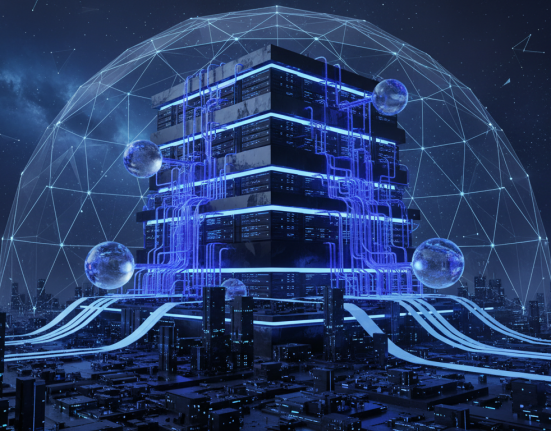
Modern AI clusters are approaching a theoretical limit known as the "Interconnect Wall." As Graphics Processing Units (GPUs) and Tensor Processing Units (TPUs) grow exponentially faster, the copper and optical cables connecting them are struggling to keep pace with the required data throughput. This latency and bandwidth deficit creates a scenario where expensive compute cores sit idle, waiting for data packets to arrive. The entry of aerospace engineers into this domain suggests a first-principles approach to signal integrity and photonic efficiency, potentially reducing the energy cost per bit of data transfer—a metric that defines the economic viability of future foundation models.
This development is not merely about hardware; it is a critical enabler for the next generation of distributed training architectures. Without breakthroughs in interconnect technology, the roadmap for trillion-parameter models described in our analysis of the Wafer Scale Revolution Benchmarking Openai S Gpt 5 3 Codex Spark Architecture becomes financially and thermodynamically unsustainable. The $50M injection signals that venture capital is now prioritizing the plumbing of the AI stack as highly as the models themselves.
Deconstructing the "Interconnect Wall" in AI Clusters
To understand why this Series A raise is technically significant, one must understand the current limitations of data center networking. In a standard H100 or Blackwell-based cluster, thousands of GPUs must communicate via an All-to-All pattern during training. This requires massive bisection bandwidth. Current standards, such as InfiniBand or high-speed Ethernet, rely heavily on pluggable optical transceivers that convert electrical signals to light and back again. This Optical-Electrical-Optical (OEO) conversion is power-hungry and introduces latency.
The "SpaceX methodology" implies a radical redesign, likely focusing on Co-Packaged Optics (CPO) or novel photonic switching fabrics that eliminate unnecessary conversions. By bringing the photonics closer to the ASIC (Application-Specific Integrated Circuit), engineers can drastically reduce the power consumption associated with driving signals across copper traces on a PCB. This is critical because, as we noted when analyzing Silicon Thermodynamics Analyzing Peak Xv S Strategic Bet On C2i To Shatter The A, heat dissipation is becoming the primary constraint in cluster design. If 30% of a cluster’s power budget is spent on moving data rather than computing it, the efficiency gains from new interconnects translate directly to higher model performance.
- Latency Tail Reduction: In distributed training, the slowest link defines the iteration speed. Aerospace-grade reliability engineering can minimize packet loss and jitter, essential for synchronous gradient descent.
- Energy Efficiency: Reducing the picojoules per bit (pJ/bit) metric allows data centers to deploy more compute within the same power envelope.
- Density: High-density interconnects allow for tighter physical packing of compute nodes, further reducing time-of-flight latency.
The Impact on Open Source Model Training
The implications of this hardware evolution extend deeply into the open-source ecosystem. Unlike closed labs like OpenAI or Google, which build bespoke, proprietary interconnects (like NVLink at scale or Google’s Jupiter fabric), the open-source community relies on commoditized hardware availability. If the technology developed by these SpaceX veterans becomes commercially available, it could democratize access to hyperscale training capabilities.
For instance, training a model with the complexity discussed in our Deepseek V3 Vs Llama 4 Maverick Mla Moe Architecture Deep Dive requires managing massive Mixture-of-Experts (MoE) routing tables. MoE architectures are notoriously bandwidth-intensive because tokens must be routed to specific experts distributed across different GPUs. Slow interconnects result in "expert bottlenecks," where the model’s throughput collapses.
By commoditizing high-bandwidth, low-latency links, we enable smaller research labs and sovereign AI initiatives to build clusters that rival the Tier-1 tech giants. This aligns with the broader trend of hardware disaggregation, where the innovation moves from the GPU die to the system level. A cluster utilizing these advanced links could theoretically train a Llama-4 class model with fewer GPUs by maintaining higher utilization rates, altering the economic calculus for open-source foundation models.
Applying Aerospace Rigor to Silicon Photonics
The narrative of "SpaceX veterans" carries weight because it implies a specific engineering culture: iterative testing, vertical integration, and a refusal to accept industry standard limitations. In rocketry, mass and specific impulse are the governing variables. In data center networking, the equivalents are bandwidth density and latency.
Legacy networking vendors have historically improved speeds incrementally—doubling bandwidth every few years in lockstep with IEEE standards. A startup born from the aerospace sector is more likely to attempt a step-function change. We saw a similar need for radical architectural shifts when we explored the Architect S Guide Gpt Oss 120b Hardware Prerequisites Cluster Design. The traditional spine-leaf network topologies are becoming insufficient for the traffic patterns of trillion-parameter training runs.
Vertical Integration and Cost Reduction
SpaceX slashed launch costs by manufacturing components in-house that were previously outsourced. If this new venture applies the same logic to optical transceivers, laser sources, and switching ASICs, they could dramatically lower the capital expenditure (CapEx) required to build high-performance AI clouds. Currently, the networking fabric can account for 20-30% of a cluster’s total cost. Reducing this allows for investment redistribution into compute or energy storage.
Strategic Insight: The bottleneck is no longer the GPU; it is the network. The company that solves the "off-chip" bandwidth problem effectively owns the roadmap for future AI scaling.
The Sovereign Compute Angle
As nations scramble to secure their own AI infrastructure, the demand for non-proprietary high-performance hardware is skyrocketing. We have tracked this phenomenon extensively, particularly in our report on the Sovereign Compute Shift Deconstructing Blackstone S 1 2b Strategic Injection Int. Governments and sovereign wealth funds are building data centers that require vendor-neutral interconnects to avoid lock-in with a single GPU provider.
New data center links that offer high performance without being tied to a specific GPU ecosystem (like NVLink is to Nvidia) provide a strategic off-ramp for these massive infrastructure projects. This creates a more competitive market where AMD, Intel, and custom silicon providers can compete on a level playing field, provided they can interconnect their chips efficiently. This hardware neutrality is essential for the long-term health of the open-source AI ecosystem.
Implications for Agentic AI Workflows
Looking beyond training, the inference phase of future AI systems will be dominated by agentic workflows. These are systems where multiple AI models interact, reason, and execute tasks in real-time. As detailed in our article Enterprise Ai Architecture Openai S Strategic Shift To Agentic Platforms Corpora, agentic systems require low-latency communication between disparate models—vision models, reasoning engines, and execution agents.
High-speed data center links enable these distinct models to reside on different nodes while behaving as a single cohesive intelligence. If the latency between nodes is too high, the "thought process" of the agent becomes sluggish, rendering it useless for real-time applications like robotics or high-frequency trading. Therefore, the technology funded by this $50M Series A is not just about training bigger models; it is about enabling the high-frequency inference required for autonomous agents.
Furthermore, this aligns with the architectural needs seen in Google Deepmind 2025 Analyzing 8 Critical Architectural Shifts In Ai, where the decoupling of memory, compute, and networking is predicted to be a major trend. The ability to pool memory across a data center using ultra-fast links allows for "Memory Disaggregation," giving models access to vastly more context than can fit on a single server.
Technical Specifications: What to Expect
While specific product details from the startup remain guarded, industry trends and the scale of the investment suggest several key technical targets:
- Throughput: Likely targeting 1.6 Terabits per second (Tbps) or higher per lane, surpassing current 800G standards.
- Modulation: Advanced PAM4 (Pulse Amplitude Modulation) or coherent optics to maximize spectral efficiency.
- Topology Support: Hardware native support for non-blocking topologies like Dragonfly or Hypercube, which are efficient for AI workloads.
- Latency: Sub-microsecond hop latency to minimize the synchronization overhead in parallel processing.
This level of performance is necessary to handle the video generation pipelines we see emerging. As noted in Architecting Hyper Scale Inference The Engineering Reality Behind Scaling Sora A, generative video models require streaming massive tensors across the cluster in real-time. Traditional data center networks simply choke under this load, leading to the "server busy" errors users frequently encounter.
Conclusion: The Infrastructure of Tomorrow
The $50M Series A raised by SpaceX veterans for data center links is a strong indicator that the AI industry is maturing from a software-exploration phase into a hardware-consolidation phase. The limitations of current physical infrastructure are palpable. Just as Deepseek R1 Architecture Optimizing Local Inference On 8gb Vram showed us how to optimize software for constrained hardware, this new venture promises to unclog the hardware constraints themselves.
For the open-source AI community, this is a beacon of hope. It suggests a future where high-performance clusters are not the exclusive domain of a trillion-dollar monopoly but are buildable using commoditized, high-efficiency components. As we watch this technology mature, it will likely become a cornerstone of the post-2025 AI infrastructure stack.
Frequently Asked Questions
Why is data center interconnect technology critical for AI?
AI models are trained by splitting data and computations across thousands of GPUs. These GPUs must constantly exchange information to synchronize their learning. If the connections (interconnects) between them are slow, the GPUs spend more time waiting for data than calculating, wasting energy and money. High-speed interconnects solve this bottleneck.
How does this relate to SpaceX?
The startup was founded by former SpaceX engineers. The connection implies a philosophy of "first-principles" engineering—rethinking problems from the ground up rather than iterating on existing solutions. This approach, which lowered the cost of space launch, is now being applied to data transmission.
Will this benefit open source AI models?
Yes. Currently, the best interconnects (like NVLink) are proprietary. If this startup creates a high-performance, vendor-neutral interconnect, it allows organizations to build powerful clusters for training open-source models without being locked into a single hardware vendor.
What is the difference between optical and copper interconnects?
Copper is cheaper but struggles with signal loss over long distances and at high speeds, generating significant heat. Optical interconnects use light, allowing for faster data transfer over longer distances with less heat, but they have historically been more expensive and complex to integrate directly with chips.
How does this impact inference costs?
Faster interconnects allow for more efficient utilization of hardware. This means fewer GPUs can do the same amount of work, or the same number of GPUs can serve more users. This efficiency lowers the cost per token, making AI services cheaper and more scalable.