The Next Frontier: Apple is Reportedly Cooking Up a Trio of AI Wearables to Redefine Ambient Computing
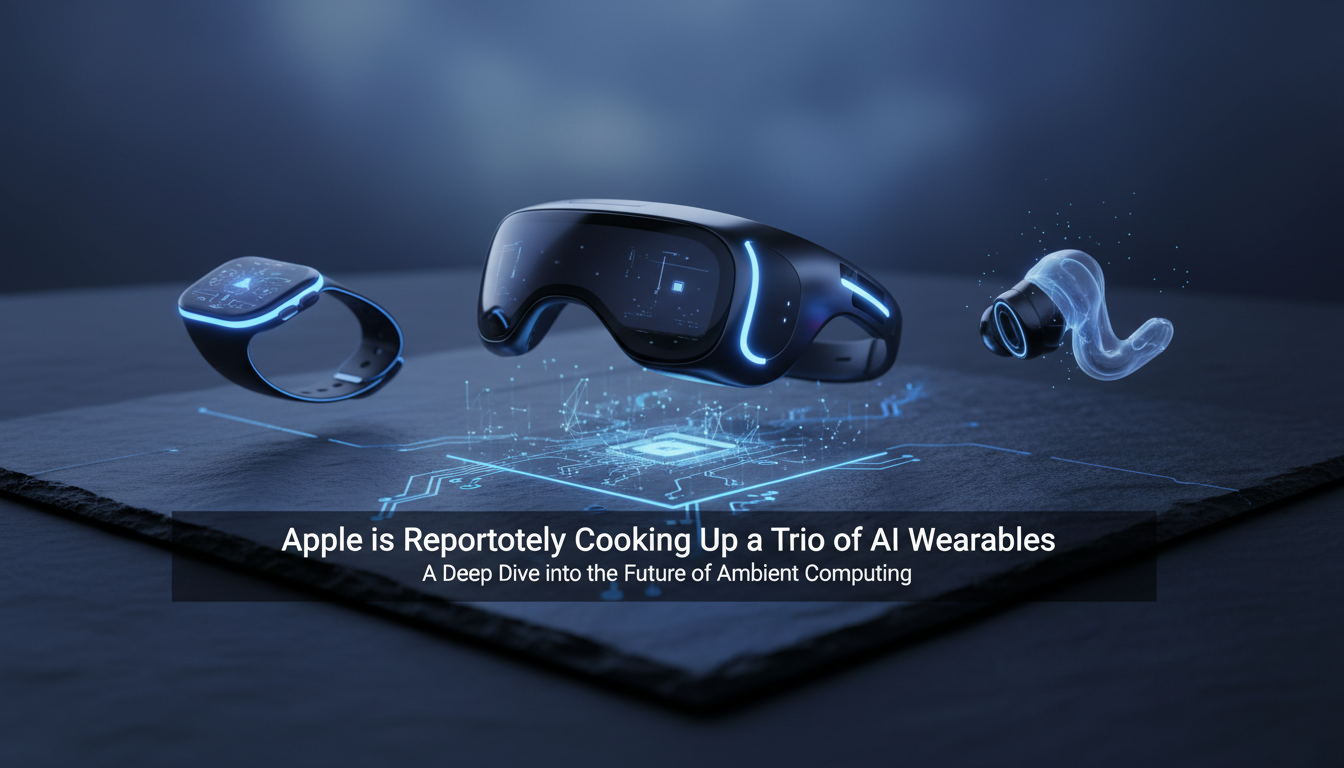
The era of the smartphone as the sole epicenter of digital life is showing signs of evolution. In a move that signals a decisive shift toward ambient computing, Apple is reportedly cooking up a trio of AI wearables designed to decouple users from their screens while deepening their integration into the Apple ecosystem. Following the spatial computing groundwork laid by the Apple Vision Pro, these rumored devices—smart glasses, camera-equipped AirPods, and a health-focused smart ring—represent a strategic pivot toward hardware that is less intrusive yet more omnipresent.
For industry observers and developers tracking open-source AI projects and proprietary tech alike, this development suggests that Apple is preparing to challenge Meta’s Ray-Ban dominance and Oura’s health supremacy directly. However, unlike its competitors, Apple brings the massive weight of “Apple Intelligence”—its privacy-focused, on-device generative AI framework—to the table. This article explores the technical feasibility, strategic implications, and user experience paradigms of these three potential devices.
1. The Vision-Equipped AirPods: Hearing the World, Seeing the Context
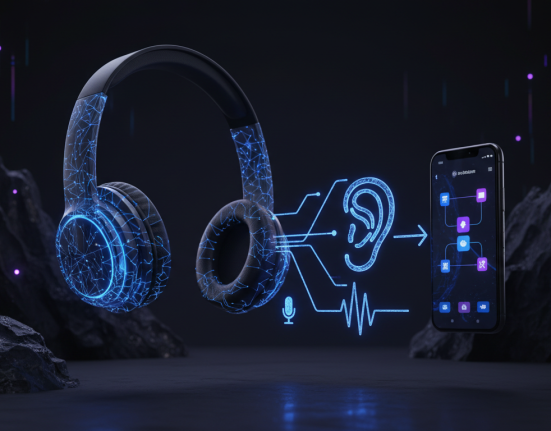
Perhaps the most technically intriguing of the rumored trio is the concept of AirPods embedded with low-resolution infrared (IR) or CMOS cameras. Codenamed in rumor circles as potentially being a variation of the B798 project, this device attempts to solve a fundamental problem in AI interaction: context.
The Technical Proposition
Current voice assistants, including Siri, lack visual context. If you ask, “What is this?” while holding a flower, a voice-only assistant is helpless. By embedding cameras into the stems of AirPods, Apple could leverage multimodal AI to process the visual field without requiring the user to wear glasses or hold up a phone. This aligns with the broader industry trend of multimodal Large Language Models (LLMs) that ingest both text/audio and image data.
Key technical considerations for camera-equipped AirPods include:
- Thermal Constraints: Processing video feeds generates significant heat. Apple would likely rely on offloading processing to a paired iPhone via ultra-wideband (UWB) or optimized Bluetooth, utilizing the iPhone’s Neural Engine rather than the earbud’s H-series chip alone.
- Battery Density: Adding image sensors consumes precious milliamp-hours. We anticipate Apple might utilize lower-power sensors activated only by specific voice triggers or gesture intents to preserve the typical 5-6 hour battery life.
- Privacy Indicators: A major hurdle is the “spy camera” stigma. Unlike glasses where an LED is visible, ears are often covered by hair. Apple will need to innovate a distinct visual or auditory cue to signal recording, adhering to their stringent privacy marketing.
Insert chart showing consumer sentiment on wearable cameras vs. privacy concerns here
The “Siri with Eyes” Workflow
Imagine walking through a foreign city. You gaze at a menu and ask your AirPods, “Translate this and tell me which dish is vegan.” The cameras capture the text, the iPhone processes the OCR (Optical Character Recognition) and translation locally, and the translation is whispered into your ear. This form of “invisible” augmented reality focuses on audio overlays rather than visual holograms, bypassing the complex optics required for AR glasses.
2. Project Atlas: The Smart Glasses to Rival Meta
While the Apple Vision Pro is a marvel of high-fidelity spatial computing, it is heavy, expensive, and isolating. Reports suggest Apple has initiated “Project Atlas,” an internal study of smart glasses, aiming to create a lightweight, all-day wearable that competes directly with the Meta Ray-Ban smart glasses.
Display-Less vs. Heads-Up Display (HUD)
The industry is currently split between two form factors for smart glasses:
- AI-First Audio Glasses (Display-less): Like the Meta Ray-Bans, these rely on cameras and microphones to capture content and query AI assistants. They are lightweight, stylish, and battery-efficient.
- AR Lite (HUD): These project simple notifications (arrows for navigation, text messages) onto the lens.
Given the rumors that Apple is reportedly cooking up a trio of AI wearables, it is highly probable that Apple will target the “AI-First” category initially. The technology for full AR in a regular eyeglass form factor—specifically waveguide optics with sufficient brightness and battery life—is likely still 3-5 years away from meeting Apple’s “Retina” quality standards.
Integration with Apple Maps and Visual Search
For AI research trends, the holy grail is egocentric vision—AI that sees what you see. Apple’s glasses would likely integrate deeply with Apple Maps for “Look Around” navigation and Visual Intelligence (similar to Google Lens) to identify storefronts, landmarks, and objects instantly. By utilizing the Private Cloud Compute architecture, Apple can claim a privacy advantage, ensuring that the video stream analyzed by the AI is not stored permanently on servers used for advertising profiles.
3. The Apple Ring: Closing the Health Loop
The third pillar in this rumored triumvirate is the Smart Ring. With Samsung entering the market with the Galaxy Ring and Oura firmly established, Apple’s entry seems inevitable to complete its health ecosystem.
The Biometric Advantage
The wrist is a good place for biometrics, but the finger is often better for specific metrics like blood oxygen (SpO2) and heart rate variability (HRV) due to the density of capillaries. A ring form factor allows for:
- Sleep Tracking Comfort: Many users find wearing an Apple Watch to bed uncomfortable or need to charge it overnight. A ring offers a low-friction alternative for 24/7 tracking.
- Gesture Control: Beyond health, an Apple Ring could serve as a high-fidelity input device for the Vision Pro or other Apple devices, detecting subtle finger taps and swipes more accurately than computer vision alone.
Cannibalization Risks?
Critics argue a ring might cannibalize Apple Watch sales. However, Apple has historically never feared self-cannibalization (e.g., iPhone eating the iPod). Strategically, the ring serves a different market segment: those who prefer mechanical watches or no watch at all, yet still want to participate in the Apple Health and Fitness+ ecosystem. It acts as an entry-level sensor node rather than a computing hub.
The Backbone: Apple Intelligence and Private Cloud Compute
Hardware is only as good as the software driving it. The unifying thread across these three devices is Apple Intelligence. Unlike standard cloud-based AI, Apple’s hybrid approach is critical for wearables.
On-Device Processing
For wearables with limited battery, latency is the enemy. Apple’s custom silicon (S-series and H-series chips) is optimized for local inferencing. The rumored devices will likely perform wake-word detection, basic object recognition, and sensor fusion locally.
Contextual Awareness Graph
The true power lies in the ecosystem. If you are wearing the Ring, AirPods, and possess an iPhone, the “Personal Context” graph becomes incredibly rich. The Ring detects high stress (HRV), the AirPods detect a loud environment, and the iPhone knows you have a meeting in 5 minutes. Apple Intelligence can synthesize this data to proactively suggest enabling “Do Not Disturb” or summarizing incoming notifications to reduce cognitive load. This level of cross-device orchestration is difficult for fragmented Android ecosystems to replicate.
Strategic Analysis: Why These Three? Why Now?
The smartphone market has plateaued. Replacement cycles are lengthening, and innovation is incremental. By diversifying into ambient wearables, Apple is hedging against the potential decline of the handheld screen.
The “Invisible” Interface
We are moving from “User Interface” (UI) to “User Intent.” Screens require focused attention; AI wearables require only intent. Apple’s move to cook up a trio of AI wearables signals a belief that the future of computing is not about staring at a rectangle, but about computing weaving into the fabric of daily activity. This aligns with the broader tech trend toward “Invisible Tech.”
Developer Opportunities
For the multimedia news strategy and app development community, these devices open new frontiers:
- App Intents: Developers must optimize their apps for Siri Intents. If a user asks their glasses to “Order my usual coffee,” the Starbucks app must expose that functionality to the system level without a UI launch.
- Audio AR: News organizations and content creators should explore 3D audio and concise, spoken-word summaries. The “glanceability” of news will transition to “listenability” and “contextual relevance.”
Privacy and Ethical Implications
With great data capture comes great responsibility. Apple has built its brand on privacy, but cameras on faces and ears test the limits of social acceptability.
The “Glasshole” Effect: Google Glass failed largely due to social stigma. Meta has softened this by partnering with Ray-Ban to make the glasses look traditional. Apple’s design philosophy usually leans towards distinctive minimalism, but for glasses, blending in is a feature, not a bug. They must balance brand recognition with social camouflage.
Data Sovereignty: As these devices capture continuous streams of audio and visual data, the question of who owns the training data arises. Apple’s stance is that Personal Context data stays on the device or in the encrypted Private Cloud. This stands in stark contrast to models that scrape user interactions to train the next generation of foundation models.
Conclusion: The Ecosystem Moat Deepens
If Apple is reportedly cooking up a trio of AI wearables, it is not merely throwing spaghetti at the wall. It is a calculated fortification of their walled garden. Each device fills a sensory gap: The Ring for touch and internal biology, the AirPods for hearing and now seeing, and the Glasses for augmented vision.
For the consumer, this promises a future where technology is helpful but hidden. For the tech industry, it sets the stage for the next great hardware war: the battle for the body. As we await official confirmations, likely at a future WWDC or September event, the message is clear: the iPhone was just the beginning. The future is wearable, multimodal, and undeniably AI-driven.
Insert timeline graphic of predicted release dates for Apple Wearables here
Frequently Asked Questions – FAQs
When will Apple release these AI wearables?
While Apple does not comment on rumors, analysts predict a staggered release. The Smart Ring and updated AirPods with cameras could potentially appear as early as 2026, while high-quality AR smart glasses (Project Atlas) are likely further out, possibly 2027 or beyond, as battery and display technology matures.
Will the new AirPods work with older iPhones?
It is likely that camera-equipped AirPods will require an iPhone with a specialized Neural Engine to handle the image processing bandwidth, potentially limiting full compatibility to iPhone 15 Pro models and newer, similar to the current Apple Intelligence requirements.
How will Apple handle privacy with cameras on AirPods?
Apple will almost certainly implement hardware-level indicators (like LED lights) that signal when recording is active. Furthermore, data processing is expected to happen on-device or via Private Cloud Compute, ensuring video feeds are not accessible to Apple or third parties.
Can I use the Apple Smart Ring with an Android phone?
Historically, Apple wearables (like the Apple Watch) do not pair with Android devices. It is highly probable that the Apple Ring will require an iPhone to function, serving as another anchor to the Apple ecosystem.
What is the difference between Project Atlas and Vision Pro?
The Vision Pro is a high-end Mixed Reality headset designed for immersive spatial computing indoors. Project Atlas aims to produce lightweight smart glasses for all-day wear, likely focusing on AI assistance and simple overlays rather than full immersive VR experiences.