The March 4 Mandate: Apple’s Strategic Hardware Pivot
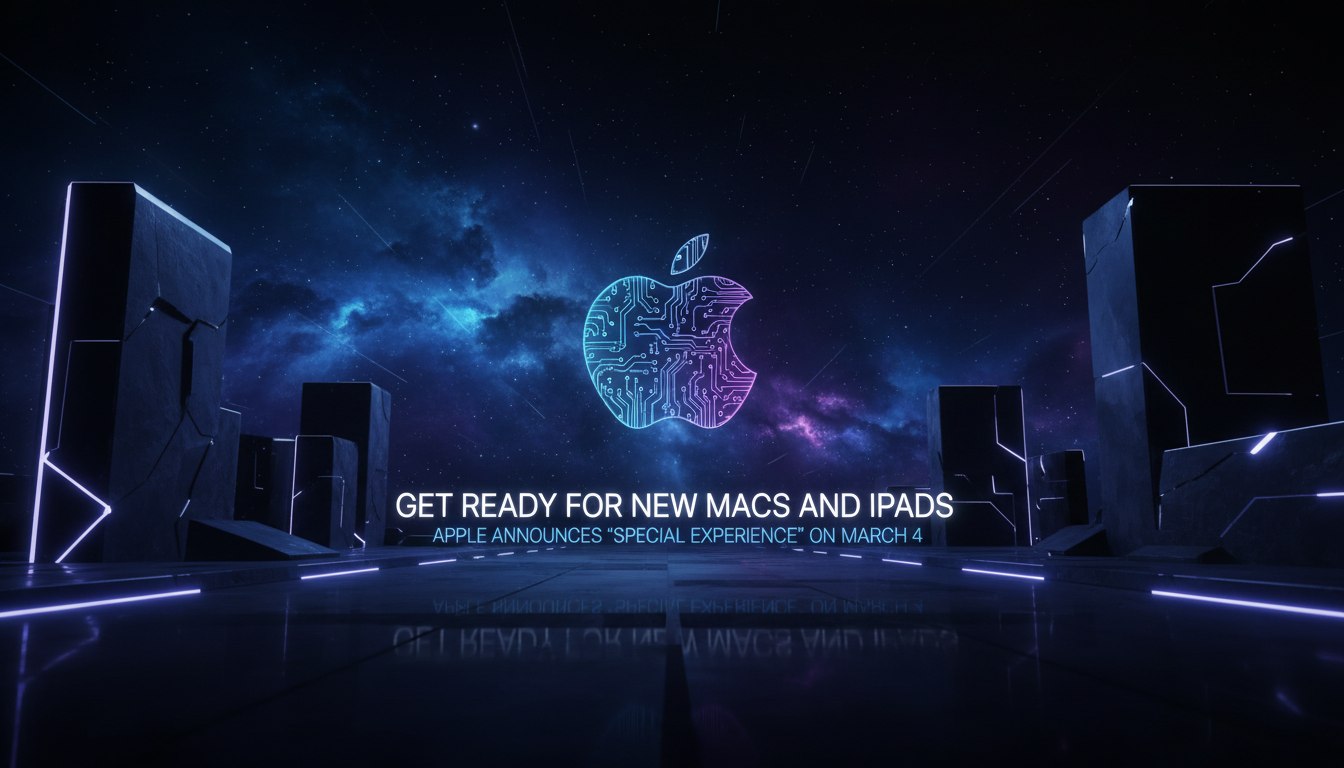
The tech world has officially received its marching orders for the spring season. In a move that signals both confidence and a strategic shift in product positioning, Apple has issued invitations for a "Special Experience" taking place on March 4. While the phrasing deviates from the standard "Special Event" nomenclature often associated with pre-taped Cupertino keynotes, the implications are clear: a significant refresh of the hardware ecosystem is imminent. For industry observers and open-source AI enthusiasts, this event is not merely about thinner bezels or faster clock speeds; it represents the next phase of consumer hardware optimized for local intelligence.
The timing of this announcement aligns with supply chain chatter regarding the mass production of M4-equipped laptops and a radically redesigned budget iPhone. As we look toward the event, which reportedly centers on hands-on demonstrations in varied global locations rather than a singular Steve Jobs Theater presentation, we must analyze what this means for the broader landscape of AI adoption trends and personal computing power. The phrase "Get ready for new Macs and iPads: Apple announces "Special Experience" on March 4" is now the headline defining the Q1 tech narrative.
The M4 MacBook Air: Democratizing Local AI Inference
The centerpiece of the March 4 event is widely expected to be the updated MacBook Air lineup, featuring the M4 silicon. The M4 chip, first debuted in the iPad Pro, represents a critical leap in Apple’s architectural focus, specifically regarding the Neural Engine (NPU). For developers and users running open-source AI projects locally, the M4 Air is poised to become the default entry-level recommendation.
Architectural Enhancements and NPU Performance
The M4 chip is built on TSMC’s second-generation 3nm process (N3E). While CPU performance gains over the M3 are incremental—focusing on efficiency and single-core speeds—the NPU has received substantial attention. Capable of up to 38 trillion operations per second (TOPS), the M4’s Neural Engine is designed to accelerate workloads involved in machine learning inference.
- Memory Bandwidth: Improvements in memory bandwidth efficiency will allow for faster token generation in local LLMs (Large Language Models).
- Base RAM Shift: A critical development is the anticipated standardization of 16GB of Unified Memory as the base configuration. This 16GB baseline is a game-changer for running quantized versions of models like Llama 3 or Mistral directly on-device without severe swapping penalties.
- Thermal Efficiency: The fanless design of the MacBook Air remains its defining physical trait. The N3E process should allow the M4 to sustain peak performance longer before thermal throttling sets in, a crucial factor for sustained AI compilation tasks.
13-inch vs. 15-inch Strategy
We expect simultaneous updates for both the 13-inch and 15-inch models. The 15-inch MacBook Air, in particular, has found a niche among data scientists and content strategists who require screen real estate for coding environments but do not need the active cooling and bulk of the MacBook Pro. With the M4, the gap between the "Air" and "Pro" monikers narrows further for bursty workloads, though sustained heavy rendering will still belong to the Pro series.
Insert chart showing Geekbench ML scores comparing M2, M3, and projected M4 performance here
The iPhone SE 4: A Flagship Wolf in Budget Clothing
Perhaps the most disruptive announcement expected at the "Special Experience" is the fourth-generation iPhone SE. This device is rumored to be a complete departure from the iPhone 8 chassis that defined previous iterations. By adopting a design similar to the iPhone 14, Apple is effectively retiring the Home Button and Touch ID from its mainline phone offerings.
Specs and Market Impact
The iPhone SE 4 is not just a budget phone; it is a vehicle for Apple Intelligence mass adoption. To support the generative features introduced in iOS 18, this device must ship with at least 8GB of RAM and a modern A-series chip, likely the A18.
- Display: A shift to OLED panels, marking the end of LCDs in new iPhones.
- Modem Technology: There is a high probability that this device will be the testbed for Apple’s proprietary 5G modem, a project years in the making aimed at reducing reliance on Qualcomm.
- The Action Button: Reports suggest the inclusion of the Action Button, bringing flagship utility to the entry-level price point.
For the multimedia news strategy ecosystem, the iPhone SE 4 lowers the barrier to entry for mobile journalism tools and AI-driven content creation apps, democratizing access to high-fidelity capture and processing.
iPad Evolution: Air, Entry-Level, and Accessories
The iPad lineup remains a complex puzzle of SKUs, but the March 4 event aims to clarify the mid-range and entry-level options. While the iPad Pro M4 is already in the wild, the rest of the family is due for synchronization.
The iPad Air Refresh
The iPad Air is expected to receive a chip upgrade, potentially to the M3 or M4, ensuring it remains a viable alternative to the Pro for illustrators and light administrative work. The focus here will likely be on accessory compatibility, specifically with the new Apple Pencil Pro and potentially a new iteration of the Magic Keyboard that brings function keys to the Air tier.
Eleventh-Generation iPad
The base iPad (11th Gen) is critical for the education sector. We anticipate a spec bump to the A16 or A17 chip to support improved multitasking and potentially some tier of Apple Intelligence features, although hardware limitations may restrict the most advanced on-device models.
The “Special Experience” Format: A New Era of PR?
Why call it a “Special Experience” instead of a keynote? This nomenclature suggests a decentralized approach. Rather than a single broadcast from Apple Park, rumors point to simultaneous hands-on sessions in London, Los Angeles, and possibly Asian markets. This strategy allows tech journalists and influencers to interact with the hardware immediately, generating a wave of verified first-hand reports that dominate the news cycle more effectively than a pre-recorded video.
This shift in news pacing is deliberate. By prioritizing hands-on impressions over cinematic reveals, Apple controls the narrative through tactile validation. For content strategists, this means the initial flood of coverage will be fragmented and experiential, requiring a synthesis of global perspectives to understand the full picture.
Apple Silicon and the Open Source AI Ecosystem
At OpenSourceAI News, our primary interest lies in the intersection of hardware and open software. Apple’s silicon evolution is inextricably linked to the success of frameworks like MLX, which allows efficient training and inference of transformer models on Mac hardware.
The Unified Memory Advantage
The Unified Memory Architecture (UMA) of Apple Silicon remains its greatest asset for AI. Unlike traditional PC architectures where VRAM is distinct from system RAM, Apple’s UMA allows the GPU to access the entire memory pool. An M4 MacBook Air with 24GB of RAM (if configured) can load larger model weights than an RTX 4060 laptop with only 8GB of VRAM.
Implications for Developers:
- Local Fine-Tuning: The M4’s improved NPU and memory bandwidth facilitate efficient LoRA (Low-Rank Adaptation) fine-tuning of small language models.
- Edge Deployment: The iPhone SE 4’s A18 chip will enable developers to test on-device CoreML models on the most constrained modern hardware, ensuring efficient code that scales up to Pro models.
- Privacy-First AI: With powerful local compute, sensitive data processing (e.g., medical or legal document analysis) can remain on the device, a key selling point for enterprise adoption.
Market Context: The Battle for the AI PC
Apple’s announcement does not happen in a vacuum. The "AI PC" narrative is currently being pushed aggressively by competitors leveraging the Qualcomm Snapdragon X Elite and Intel’s Core Ultra (Meteor Lake and Lunar Lake) series. These Windows-based machines boast NPUs and efficient ARM-based architectures (in Qualcomm’s case) that rival Apple’s battery life dominance.
The March 4 event is Apple’s rebuttal. By potentially standardizing 16GB of RAM and pushing the M4 into the high-volume MacBook Air, Apple is fortifying its moat. They are asserting that the Mac is not just a creative tool, but the premier platform for the AI age. This competitive pressure is excellent for consumers, as it drives innovation in thermal management, battery density, and NPU utilization rates across the industry.
Strategic Editorial Takeaways
For publishers and content creators covering this event, the focus must shift beyond the spec sheet. The story is no longer "it’s faster"; the story is "what can it do that it couldn’t before?" Specifically, how do these devices enable new workflows?
When reporting on the March 4 event, consider these angles:
- Value Proposition: With the iPhone SE 4, is the "Apple Tax" diminishing? A $499 device with flagship processing power disrupts the mid-range Android market significantly.
- Sustainability: Apple often touts the use of recycled materials. Investigating the supply chain claims of the new iPad manufacturing process offers a unique investigative reporting angle.
- Software Synergy: Hardware is useless without software. Watch for hints of macOS 15 or iOS 18.x updates that unlock specific M4 capabilities.
Conclusion: A Pillar of the 2025 Tech Roadmap
The phrasing "Get ready for new Macs and iPads: Apple announces ‘Special Experience’ on March 4" serves as a clarion call for the industry. This event will likely set the baseline for what is considered an "acceptable" computer for the next three years. With the M4 MacBook Air, Apple is likely eliminating the 8GB RAM bottleneck that has plagued entry-level professional workflows. With the iPhone SE 4, they are bringing the Neural Engine to the masses.
As we approach the date, OpenSourceAI News will continue to monitor the technical specifications and developer documentation that emerge. The convergence of Apple Silicon’s raw throughput and the burgeoning efficiency of open-source models (like Llama 3 and Mistral) suggests that 2025 will be the year local AI becomes truly usable for the average consumer.
Frequently Asked Questions – FAQs
What is the significance of the “Special Experience” wording?
The term “Special Experience” suggests a departure from traditional theater-style keynotes. It implies a focus on hands-on demonstrations and decentralized events in major cities like London, allowing press to interact physically with the new hardware immediately, highlighting the tactile and functional improvements of the devices.
Will the M4 MacBook Air support ray tracing?
Yes, the M4 chip architecture includes hardware-accelerated ray tracing. While the MacBook Air is not a dedicated gaming laptop, this feature significantly assists in 3D rendering workflows and architectural visualization applications, making it a versatile tool for creators on the go.
Is the iPhone SE 4 capable of running Apple Intelligence?
All signs point to yes. For the iPhone SE 4 to be viable in Apple’s current ecosystem strategy, it must support Apple Intelligence features. This necessitates the inclusion of at least an A17 Pro or A18 chip and, crucially, 8GB of RAM to handle on-device LLM processing.
Why is the 16GB RAM base model update important?
For years, Apple’s base 8GB RAM has been a bottleneck for heavy multitasking and, more recently, for running local AI models. Increasing the base to 16GB allows users to run larger quantized language models locally and improves the longevity of the device as software demands increase.
Will there be a new Mac Studio at this event?
Current rumors suggest the March 4 event focuses on consumer-grade devices (Air, iPad, iPhone SE). The Mac Studio and Mac Pro, likely featuring M4 Ultra chips, are expected to be announced later in the year, possibly at WWDC, to coincide with professional software updates.