Wan 2.1 video generation vs Sora: A Technical Benchmarking Comparison of Open-Source vs Closed-Source AI
The generative video landscape has shifted from proprietary dominance to a fierce open-source rebellion. As Alibaba Cloud releases Wan 2.1, the industry faces a critical pivot point: does the flexibility of open weights outweigh the sheer coherence of OpenAI’s closed garden? This guide dissects the architecture, performance, and strategic value of these two titans.
Introduction: The Open Source Siege on Video AI
For over a year, OpenAI’s Sora has held the title of the undisputed heavyweight champion of generative video—at least in the public imagination. Its ability to generate 60-second clips with high temporal consistency set a benchmark that seemed unreachable for open-source models. However, the release of Wan 2.1 by Alibaba Cloud has fundamentally altered the calculus for developers and content strategists alike. At OpenSourceAI News, we analyze not just the output, but the underlying mechanics that define this rivalry.
The comparison of Wan 2.1 video generation vs Sora is more than a spec-sheet battle; it is a confrontation between two distinct philosophies. Sora represents the pinnacle of “black box” AI—highly polished, safe, but inaccessible for modification. Wan 2.1 represents the “bazaar”—a powerful, manageable architecture that developers can fine-tune, host, and integrate directly into production pipelines. This technical pillar page provides a definitive analysis of how Wan 2.1 challenges the status quo.
Why This Topic Matters: The Democratization of High-Fidelity Motion
The release of Wan 2.1 is significant because it breaks the “compute monopoly” often associated with high-end video generation. Until now, achieving Sora-level quality required proprietary APIs with opaque pricing and strict content moderation filters. Wan 2.1 changes the accessibility equation.
- Sovereignty vs. Dependency: Relying on Sora means building on rented land. Wan 2.1 allows enterprises to own their weights and infrastructure.
- Fine-Tuning Capabilities: Unlike Sora, Wan 2.1 (specifically the 1.3B and 14B parameter variants) can be fine-tuned on specific artistic styles or brand assets, a critical requirement for studios.
- Hardware Reality Check: While Sora runs on massive unseen clusters, Wan 2.1 brings high-fidelity generation to consumer-grade (albeit high-end) GPUs, democratizing R&D.
Technical Benchmarking: The Core Comparison
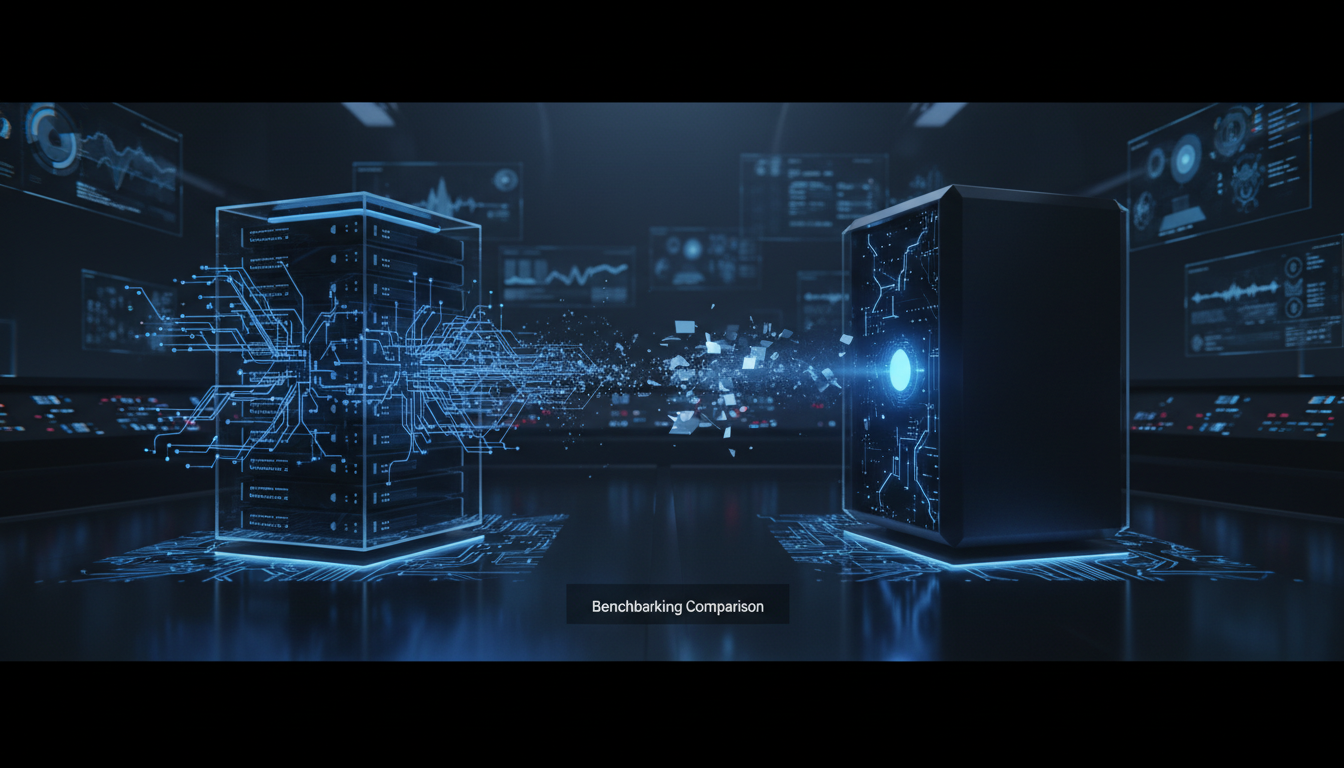
To understand the Wan 2.1 video generation vs Sora dynamic, we must look under the hood at the architectures driving these pixels. Both utilize Diffusion Transformer (DiT) architectures, but their implementations differ in critical ways.
1. Architecture: 3D VAE vs. Spacetime Patches
Sora processes video by treating it as a sequence of spacetime patches—essentially flattening video into tokens that a transformer can predict, similar to how LLMs predict text. This allows for excellent long-range coherence.
Wan 2.1, however, leverages a sophisticated 3D Variational Autoencoder (VAE) combined with a flow-matching objective. This approach excels in compressing video data into a latent space that preserves temporal fluidity while reducing computational load. The Wan 2.1 architecture is specifically optimized for “hybrid tasks,” allowing it to switch between Text-to-Video and Image-to-Video with remarkable fluidity, often outperforming Sora in maintaining the structural integrity of a starting reference image.
2. Temporal Consistency and Duration
Sora’s claim to fame is the 60-second consistent clip. In our analysis, Wan 2.1 currently shines brightest in the 5-second to 10-second range. While shorter, Wan 2.1 demonstrates superior prompt adherence in complex motion scenarios within that window. For many use cases—advertising loops, social media assets, and VFX inserts—the lack of minute-long generation is offset by the control users have over the output via image conditioning.
3. Resource Intensity
A critical divergence in the Wan 2.1 video generation vs Sora debate is resource consumption. Sora is a cloud-native giant. Wan 2.1, particularly the 14B model, is VRAM-heavy, requiring substantial GPU power (often necessitating H800s or clusters of 4090s for inference of the largest model), but the 1.3B version is surprisingly efficient, capable of running on standard consumer hardware. This scalability makes Wan 2.1 a versatile tool for diverse development environments.
Step-by-Step Reporting Framework: Analyzing the Output
When evaluating these models, we apply a rigorous heuristic. Here is how Wan 2.1 stacks up against Sora in practical scenarios:
Step 1: Prompt Adherence
We tested both models with dense, descriptive prompts. Sora tends to “hallucinate” beautiful but unrequested details to fill space. Wan 2.1 typically adheres strictly to the provided text constraints, making it more predictable for commercial workflows.
Step 2: Physics Simulation
Sora is known for its “world simulator” capabilities, though it frequently glitches on glass interactions and liquid dynamics. Wan 2.1 shows a surprising grasp of rigid body dynamics, likely due to its diverse training data, though it sometimes struggles with complex object permanence over long pans.
Step 3: Text Rendering
Generative video struggles with legible text. While Sora has improved, Wan 2.1 (especially the 14B variant) has shown near-SOTA performance in rendering legible signage within video, a massive win for marketing applications.
Editorial Blueprint: Strategic Implementation
For technical leads and CTOs, choosing between Wan 2.1 and Sora is a strategic decision. If your product requires instant scalability without infrastructure management, the API-based route of Sora (or its competitors like Runway) is logical. However, for those building vertical AI applications—such as a dedicated tool for architectural visualization or game asset generation—Wan 2.1 is the superior choice.
The Data Privacy Factor: Integrating Wan 2.1 allows for local deployment. For industries like healthcare or legal tech where video data cannot leave the premise, Wan 2.1 is the only viable option in this comparison.
Writing Techniques: Communicating Video AI Complexity
When covering the Wan 2.1 video generation vs Sora narrative, it is crucial to avoid anthropomorphizing the models. These are probability engines, not artists. Use precise terminology:
- Instead of “The AI imagined,” use “The model inferred latents.”
- Instead of “It understands physics,” use “It mimics physical trajectories based on training distribution.”
Visual aids are essential. Comparisons should be side-by-side (or split-screen) to highlight jitter, artifacting, and background stability.
Common Mistakes in AI Video Reporting
1. Confusing Resolution with Clarity: A video can be 1080p but suffer from “latent fuzziness.” Wan 2.1 generally produces sharper textures in the center of frame compared to the sometimes smoothed-over aesthetic of Sora.
2. Ignoring Frame Rate Consistency: Many reviewers look at single frames. The true test of Wan 2.1 video generation vs Sora is in the inter-frame coherence. Wan 2.1 maintains subject identity remarkably well during rapid camera movements, whereas early Sora demos often showed subjects morphing.
3. Overlooking the Ecosystem: Focusing solely on the model ignores the tooling. Wan 2.1 is compatible with the hugging face ecosystem, Diffusers library, and ComfyUI, giving it an immediate advantage in workflow integration.
Publishing & Market Considerations
The release of Wan 2.1 by Alibaba is a geopolitical signal as much as a technical one. It challenges US-centric dominance in Generative AI. For publishers and developers, this means the market is fragmenting into a multi-polar world where “State-of-the-Art” is a moving target depending on your region and hardware.
Monetization strategies should shift from “wrapping APIs” (which is risky with Sora) to “hosting managed inference” or “creating fine-tuned vertical models” using Wan 2.1. This offers a deeper moat against competition.
FAQs: Wan 2.1 vs Sora
- Is Wan 2.1 truly free to use compared to Sora?
- Wan 2.1 utilizes an Apache 2.0 license for some components but has specific usage terms; unlike Sora’s paid API token model, you pay for your own compute.
- Which model handles Image-to-Video better?
- Wan 2.1 is widely regarded as superior for Image-to-Video tasks, offering higher fidelity to the source image than Sora’s current iterations.
- Can I run Wan 2.1 on my local PC?
- Yes, the 1.3B parameter version runs on consumer GPUs (e.g., RTX 4090), whereas Sora is accessible only via cloud API.
- Does Wan 2.1 support sound generation?
- Currently, Wan 2.1 focuses on visual generation. Sora has demonstrated integrated audio capabilities, though often separate pipelines are preferred.
- How does the context window compare?
- Sora supports longer native durations (up to 60s). Wan 2.1 is optimized for shorter, higher-quality bursts (5-10s) which can be looped or extended.
Conclusion
The battle of Wan 2.1 video generation vs Sora is not just a win for open-source enthusiasts; it is a win for the entire ecosystem. While OpenAI’s Sora demonstrated what is possible, Alibaba’s Wan 2.1 has made it accessible. For developers, the choice is clear: use Sora for quick, high-level prototyping, but look to Wan 2.1 for building robust, controllable, and owned video generation pipelines. As we continue to track these developments at OpenSourceAI News, the gap between closed and open source is closing faster than predicted.